 ChipApex | Global Electronic Components Supplier
SEARCH
Search Product
Search Post
— IC芯片 | 连接器 | 传感器 | 被动器件 —
Search productSearch post
— IC芯片 | 连接器 | 传感器 | 被动器件 —
Consult the customer manager about the wholesale price.
consultation hotline:86-132-6715-2157
email:[email protected]
Contact the product manager for consultation. One-stop consultation is available.
Do you want a lower wholesale price? Please send us your inquiry and we will reply immediately.
The 18QHTF21-59.881-OE is a crystal oscillator manufactured by Mercury Electronics Ind. Co. Ltd. It operates at a fundamental frequency of 59.881 MHz. The device utilizes a surface-mount technology package designed for integration into compact electronic circuits. This component provides stable clock signals required for digital systems, ensuring precise timing synchronization across various applications where reliable oscillation is critical for system performance and data integrity.
Verify the exact part number against official manufacturer documentation to ensure compatibility with your circuit design. Confirm that the operating temperature range and load capacitance requirements match your specific application needs. Check for any specific handling instructions related to surface-mount components to prevent damage during assembly. Ensure that the supplier provides authentic products directly from authorized channels to guarantee reliability and performance standards.
Choose this component when a fundamental frequency of 59.881 MHz is required for your design. Consider the physical dimensions and pin configuration to ensure it fits within your PCB layout constraints. Evaluate the power consumption and stability characteristics against your system's timing accuracy requirements. Compare alternative packages if space limitations exist, while maintaining the necessary electrical specifications for optimal performance in your intended application environment.
This model belongs to Mercury Electronics' line of crystal oscillators, which are essential components for providing clock signals in electronic devices. These oscillators are typically used in conjunction with microcontrollers, processors, and other digital logic circuits. The specific designation indicates its unique frequency and package type, distinguishing it from other variants within the manufacturer's portfolio that may offer different frequencies or form factors suitable for diverse electronic designs.
Consult official substitution lists for compatible alternatives offering identical electrical characteristics. Verify that any substitute maintains the same frequency tolerance and load capacitance requirements. Ensure the replacement component matches the physical footprint and pinout configuration to facilitate direct board integration without redesigning the circuit layout.
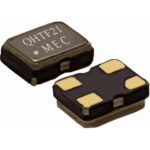 18QHTF21-59.881-OE
The activity of extra discounts on wholesale prices is in full swing…
Please fill in your contact information and we will send you the latest wholesale price list.




