 ChipApex | Global Electronic Components Supplier
SEARCH
Search Product
Search Post
— IC芯片 | 连接器 | 传感器 | 被动器件 —
Search productSearch post
— IC芯片 | 连接器 | 传感器 | 被动器件 —
Consult the customer manager about the wholesale price.
consultation hotline:86-132-6715-2157
email:[email protected]
Contact the product manager for consultation. One-stop consultation is available.
Do you want a lower wholesale price? Please send us your inquiry and we will reply immediately.
The 19TQ015CJ is a high-speed silicon rectifier diode manufactured by SMC Diode Solutions. It features a common cathode configuration with two internal die structures housed in a compact surface-mount package. The device is rated for a repetitive peak reverse voltage of 15 volts and offers an average forward rectified current capacity of 1.9 amperes per leg. Designed for efficiency, it exhibits low forward voltage drop and fast recovery characteristics, making it suitable for applications requiring rapid switching and minimal power loss in DC-DC converters and freewheeling circuits.
Verify the specific suffix code on the component marking against official SMC Diode Solutions documentation to confirm exact electrical tolerances and packaging specifications. Ensure that the procurement channel provides traceable origin data. Cross-reference the date code and lot number with manufacturer records to validate authenticity and storage history prior to integration into production lines.
Select this component when circuit design requires a low-voltage, high-current solution with fast switching capabilities. Evaluate the thermal management requirements based on the junction-to-case thermal resistance specified in the datasheet. Confirm that the operating ambient temperature range aligns with the device's maximum ratings to prevent premature failure or performance degradation during continuous operation cycles.
This part belongs to SMC Diode Solutions' series of surface-mount rectifiers designed for modern electronics manufacturing. The 19TQ015CJ utilizes advanced silicon planar technology to achieve superior reliability compared to older junction types. Its form factor supports automated pick-and-place assembly processes, facilitating efficient production workflows for consumer electronics and industrial control equipment manufacturers.
Consult official cross-reference lists from SMC Diode Solutions for verified equivalent parts. Ensure any substitute maintains identical pinout configuration, voltage ratings, and current handling capabilities. Verify that alternative components meet the same regulatory compliance standards required for the end application.
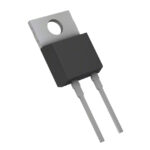 19TQ015CJ
The activity of extra discounts on wholesale prices is in full swing…
Please fill in your contact information and we will send you the latest wholesale price list.




