 ChipApex | Global Electronic Components Supplier
SEARCH
Search Product
Search Post
— IC芯片 | 连接器 | 传感器 | 被动器件 —
Search productSearch post
— IC芯片 | 连接器 | 传感器 | 被动器件 —
Consult the customer manager about the wholesale price.
consultation hotline:86-132-6715-2157
email:[email protected]
Contact the product manager for consultation. One-stop consultation is available.
Do you want a lower wholesale price? Please send us your inquiry and we will reply immediately.
The SMC Diode Solutions 1C5819 is a silicon Schottky rectifier die designed for high-efficiency power applications. It features a maximum average forward current of 1 A and a peak inverse voltage rating of 45 V. The device exhibits very low forward voltage drops, specifically 0.49 V at 1 A and 0.34 V at 0.1 A under pulse conditions at 25°C junction temperature. Electrical characteristics include a reverse leakage current of 5 mA at 100°C and a junction capacitance of 70 pF at 5 V reverse bias. The component operates within a junction temperature range of -55°C to +125°C.
Verify the specific metalization configuration required for the application, as the standard part utilizes an aluminum top and silver bottom contact. Confirm that the operating environment does not exceed the absolute maximum ratings, particularly regarding non-repetitive avalanche energy limits. Ensure compatibility with the specified thermal management requirements for the bare die form factor before finalizing procurement specifications.
Select this component when a bare die solution is preferred over packaged diodes for space-constrained designs. The 1C5819 offers lower forward voltage compared to standard silicon rectifiers, improving overall system efficiency. Consider the 45 V reverse voltage rating and 1 A current capacity against circuit demands. Evaluate the need for gold or silver top metalization options if solderability or corrosion resistance requirements differ from the default aluminum configuration.
This component belongs to the 1C581x series of silicon Schottky rectifier dies manufactured by SMC Diode Solutions. The series includes variants such as the 1C5817, which shares similar electrical characteristics but differs in voltage ratings. These devices are intended for integration into custom power modules or hybrid circuits where discrete packaged components are unsuitable due to size or thermal constraints.
The 1C5817 serves as a related variant within the same product family. Verify voltage ratings and pinout compatibility when substituting between these bare die configurations.
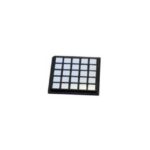 1C5819.T
The activity of extra discounts on wholesale prices is in full swing…
Please fill in your contact information and we will send you the latest wholesale price list.





