 ChipApex | Global Electronic Components Supplier
SEARCH
Search Product
Search Post
— IC芯片 | 连接器 | 传感器 | 被动器件 —
Search productSearch post
— IC芯片 | 连接器 | 传感器 | 被动器件 —
Consult the customer manager about the wholesale price.
consultation hotline:86-132-6715-2157
email:[email protected]
Contact the product manager for consultation. One-stop consultation is available.
Do you want a lower wholesale price? Please send us your inquiry and we will reply immediately.
The 1N3012RB is a single Zener diode manufactured by Microchip Technology, designed for voltage regulation applications. It features a nominal Zener voltage of 160 V with a tolerance of ±5%. The device is rated for a maximum power dissipation of 10 W and operates with a test current of 16 mA. Its maximum reverse leakage impedance is specified at 200 Ohms. The component utilizes a DO-213AA (DO-4) package, supporting chassis or stud mount installation methods for efficient thermal management in high-power scenarios.
Verify the specific manufacturer source, as Microchip acquired Microsemi which originally produced this part number. Confirm that the DO-213AA/DO-4 package designation matches your mechanical mounting requirements. Ensure compliance with RoHS standards if required by your assembly process. Cross-reference the 160 V Zener voltage and 10 W power rating against your circuit design specifications before procurement.
Select this component when a fixed 160 V regulation point is required with significant power handling capabilities. The stud-mount configuration necessitates adequate heatsinking infrastructure on the host chassis. Consider the ±5% tolerance for precision requirements. Evaluate thermal resistance characteristics to ensure the mounting surface can dissipate the full 10 W load without exceeding junction temperature limits.
This component belongs to the family of high-power single Zener diodes historically associated with Microsemi and now Microchip Technology. These devices are engineered for rugged environments where standard surface-mount packages cannot handle the thermal load. The 1N3012RB specifically addresses needs for durable, high-voltage regulation in industrial and military-grade hardware requiring reliable performance under stress.
Publicly confirmed substitute part numbers include JAN1N3012RB and JANTX1N3012RB. These variants share the same electrical specifications and physical package but may differ in quality assurance levels or testing standards. Verify pinout compatibility and thermal interface requirements when substituting.
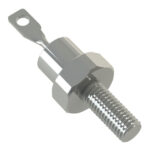 1N3012RB
The activity of extra discounts on wholesale prices is in full swing…
Please fill in your contact information and we will send you the latest wholesale price list.





