 ChipApex | Global Electronic Components Supplier

SEARCH
Search Product
Search Post
— IC芯片 | 连接器 | 传感器 | 被动器件 —
Search productSearch post
— IC芯片 | 连接器 | 传感器 | 被动器件 —
Consult the customer manager about the wholesale price.
consultation hotline:86-132-6715-2157
email:[email protected]
Contact the product manager for consultation. One-stop consultation is available.
Do you want a lower wholesale price? Please send us your inquiry and we will reply immediately.
The 1N3327B is a high-power 50 W Zener diode from the Microsemi JEDEC registered series, designed for robust voltage regulation. It features a nominal Zener voltage of 39 V with a test current of 320 mA and a maximum dynamic impedance of 4.00 Ohms at IZT. The device supports a maximum DC Zener current of 1,050 mA and operates within a junction temperature range of -65°C to +175°C. Packaged in a hermetically sealed DO-5 (DO-203AB) metal and glass case with an internal solder bond construction, it provides low thermal resistance of 2.0°C/W maximum junction-to-hexagonal base.
Verify the specific tolerance suffix required for your application, as the 'B' suffix denotes a +/- 5% Zener voltage tolerance. Confirm whether standard anode-to-case polarity or reverse polarity (indicated by an 'R' suffix) is needed. Ensure mounting hardware such as insulators or bushings are sourced separately if isolation from the chassis is required. Check for military qualifications like JAN or JANTXV if screening per MIL-PRF-19500/358 is necessary.
Select this component when high power dissipation up to 50 W is required alongside strict environmental resilience. The DO-5 package facilitates direct stud mounting for efficient heat sinking. Consider the negative temperature coefficient below 5 V and positive above 5 V for thermal stability planning. Verify that the system can accommodate the physical dimensions and weight of the hexagonal stud package.
This part belongs to the 1N3305 through 1N3350B series of 50 Watt Zener diodes manufactured by Microsemi's Scottsdale Division. These devices offer a broad voltage selection ranging from 3.9 V to 200 V. The series is characterized by low thermal resistance and robust construction suitable for demanding environments where standard plastic packages would fail.
Equivalent parts include other 50 W Zener diodes in the DO-5 package with matching 39 V specifications. Verify thermal resistance and maximum current ratings match the original design requirements. Military equivalents may require JAN or JANTX prefixes depending on screening levels.
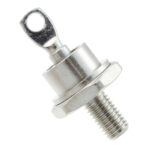 1N3327A

The activity of extra discounts on wholesale prices is in full swing…
Please fill in your contact information and we will send you the latest wholesale price list.





