 ChipApex | Global Electronic Components Supplier
SEARCH
Search Product
Search Post
— IC芯片 | 连接器 | 传感器 | 被动器件 —
Search productSearch post
— IC芯片 | 连接器 | 传感器 | 被动器件 —
Consult the customer manager about the wholesale price.
consultation hotline:86-132-6715-2157
email:[email protected]
Contact the product manager for consultation. One-stop consultation is available.
Do you want a lower wholesale price? Please send us your inquiry and we will reply immediately.
The Microchip Technology 1N5301UR-1 is a surface-mount current regulator diode designed for military and aerospace applications. It belongs to the MIL-PRF-19500/463 series, ensuring compliance with stringent reliability standards. The device utilizes a DO-213AB (MELF) glass package, providing a compact form factor suitable for high-density circuit board layouts. As a silicon-based component, it functions as a two-terminal constant current source, maintaining a steady output current regardless of voltage variations within its operational limits.
Verify that the specific ordering suffix matches the required qualification level, as military variants often carry distinct suffixes indicating testing and screening protocols. Confirm the package type corresponds to the DO-213AB MELF specification. Ensure documentation includes the necessary Certificate of Compliance or traceability records mandated by defense procurement standards before finalizing acquisition.
Select this component when a reliable, space-qualified constant current source is required in a surface-mount configuration. Evaluate the thermal management requirements associated with the MELF package geometry. Compare against standard commercial equivalents only if military qualification and extended temperature performance are not mandatory for the target application environment.
This part is part of the broader 1N53xx series of current regulator diodes manufactured by Microchip Technology. While other variants in the series may offer different current ratings or package options such as axial leads, the UR-1 designation specifically denotes the surface-mount MELF configuration tailored for high-reliability sectors. It shares functional similarities with other Zener-based current regulators but is distinguished by its specific military certification.
Direct replacements must match the MIL-PRF-19500/463 qualification and DO-213AB package dimensions. Verify that substitute parts from other manufacturers meet the same radiation tolerance and temperature range specifications. Cross-reference pinout compatibility and electrical characteristics to ensure seamless integration without redesigning the surrounding circuitry.
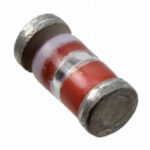 1N5301UR-1
The activity of extra discounts on wholesale prices is in full swing…
Please fill in your contact information and we will send you the latest wholesale price list.




