 ChipApex | Global Electronic Components Supplier
SEARCH
Search Product
Search Post
— IC芯片 | 连接器 | 传感器 | 被动器件 —
Search productSearch post
— IC芯片 | 连接器 | 传感器 | 被动器件 —
Consult the customer manager about the wholesale price.
consultation hotline:86-132-6715-2157
email:[email protected]
Contact the product manager for consultation. One-stop consultation is available.
Do you want a lower wholesale price? Please send us your inquiry and we will reply immediately.
The Central Semiconductor Corp 1N5314 BK PBFREE is a Zener diode designed for voltage regulation applications. It features a nominal Zener voltage of 5.6 V with a tolerance of ±5%. The device has a maximum power dissipation of 5 W and operates within a temperature range of -65°C to +200°C. It utilizes an axial leaded package configuration, specifically DO-201AH, suitable for through-hole mounting. The component maintains a low reverse leakage current of 5 µA at the rated voltage and includes a forward voltage drop specification of 1.2 V at 4 A.
Verify the specific suffix requirements for plating type when ordering, as Central Semiconductor distinguishes between lead-free and tin/lead variants via part number modifications. Confirm RoHS compliance status directly with the manufacturer or authorized distributors, as packaging and material composition details may vary by production batch. Ensure the DO-201AH footprint matches the target PCB design before finalizing procurement.
Select this component when a stable 5.6 V reference is required under high thermal stress conditions exceeding standard 150°C limits. The 5 W rating allows for direct connection to higher current sources without external heat sinks in many scenarios. Compare against lower power Zener alternatives if space constraints are secondary to thermal endurance and long-term reliability in harsh environments.
This part belongs to the standard 1N53xx series of high-power Zener diodes manufactured by Central Semiconductor. The series is characterized by its ability to handle significant power loads while maintaining tight voltage tolerances. The 1N5314 variant specifically targets the 5.6 V segment, a common reference voltage in analog circuit design. The BK PBFREE designation indicates bulk packaging and lead-free construction.
Equivalent parts include the 1N5314B from other manufacturers offering identical 5.6 V, 5 W specifications in the DO-201AH package. Verify pinout compatibility and thermal resistance values when substituting. Ensure the replacement device meets the same ±5% voltage tolerance and 200°C maximum operating temperature requirements.
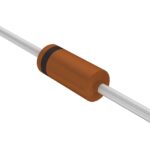 1N5314 BK PBFREE
The activity of extra discounts on wholesale prices is in full swing…
Please fill in your contact information and we will send you the latest wholesale price list.





