 ChipApex | Global Electronic Components Supplier
SEARCH
Search Product
Search Post
— IC芯片 | 连接器 | 传感器 | 被动器件 —
Search productSearch post
— IC芯片 | 连接器 | 传感器 | 被动器件 —
Consult the customer manager about the wholesale price.
consultation hotline:86-132-6715-2157
email:[email protected]
Contact the product manager for consultation. One-stop consultation is available.
Do you want a lower wholesale price? Please send us your inquiry and we will reply immediately.
The Microchip Technology 1N5359E3/TR13 is a silicon 5.0-watt Zener diode from the JEDEC registered 1N5333-5388B series, manufactured by the Microsemi Scottsdale Division. It provides voltage regulation at a nominal Zener voltage of 24 volts with a standard ±5% tolerance. The device operates within an ambient temperature range of -65°C to +150°C and features RoHS compliance indicated by the e3 suffix. Packaged in a T-18 axial lead case, it utilizes tape and reel packaging for automated assembly.
Verify that the component matches the specific 24V Zener voltage rating and 5W power dissipation requirements. Confirm the presence of the e3 suffix for RoHS compliance and TR suffix for tape and reel packaging. Ensure the manufacturer designation aligns with Microchip Technology or its acquired entities such as Microsemi. Check datasheet specifications for thermal resistance and maximum current limits relative to your heat sinking capabilities.
Select this component when a robust 5-watt axial Zener diode is required for high-power regulation tasks. Consider the wide operating temperature range and low thermal resistance for environments requiring reliable performance under thermal stress. Evaluate the need for standard ±5% tolerance against tighter precision requirements available with other suffixes. Ensure the package dimensions fit the designated PCB layout constraints.
This part belongs to the extensive 1N5333B through 1N5388B series of silicon Zener diodes originally developed by Microsemi's Scottsdale Division. The series covers a voltage selection from 3.3 to 200 volts, offering various tolerance options via specific suffix letters. The e3 designation indicates lead-free construction compliant with environmental standards, while the TR suffix specifies the reel packaging format for manufacturing efficiency.
Direct substitutes include other 1N5359 variants with compatible tolerances (e.g., 1N5359A, 1N5359C) provided they meet the 24V and 5W specifications. Cross-manufacturer equivalents must be verified for identical pinout, power dissipation, and thermal characteristics.
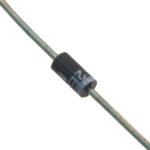 1N5359E3/TR13
The activity of extra discounts on wholesale prices is in full swing…
Please fill in your contact information and we will send you the latest wholesale price list.





