 ChipApex | Global Electronic Components Supplier
SEARCH
Search Product
Search Post
— IC芯片 | 连接器 | 传感器 | 被动器件 —
Search productSearch post
— IC芯片 | 连接器 | 传感器 | 被动器件 —
Consult the customer manager about the wholesale price.
consultation hotline:86-132-6715-2157
email:[email protected]
Contact the product manager for consultation. One-stop consultation is available.
Do you want a lower wholesale price? Please send us your inquiry and we will reply immediately.
The 1N5399G-T is a standard recovery rectifier manufactured by Taiwan Semiconductor Corporation. It features a single-phase, one-element silicon configuration housed in an axial DO-15 package. The device supports a maximum average forward current of 1.5 A and a repetitive peak reverse voltage of 1000 V. Key electrical parameters include a maximum non-repetitive peak forward surge current of 50 A, a maximum DC reverse leakage current of 5 uA at rated voltage, and a maximum forward voltage drop of 1 V at the specified current rating. The component operates within a temperature range of -65 °C to +150 °C junction temperature.
Verify the specific suffix 'T' against the manufacturer's official documentation to confirm tape-and-reel packaging specifications. Ensure the ordering part number matches the exact voltage and current ratings required for the target application. Cross-reference the RoHS compliance status and halogen-free availability directly with Taiwan Semiconductor before finalizing procurement orders.
Select this component when a 1000 V reverse voltage rating and 1.5 A continuous current capacity are required in a DO-15 through-hole package. Consider the standard recovery time and low leakage characteristics for efficiency. Verify that the thermal management design accommodates the specified junction temperature limits and surge current requirements during normal operation.
This component belongs to the 1N539xG series of silicon rectifiers produced by Taiwan Semiconductor. The series covers various voltage ratings from 50 V to 1000 V while maintaining a consistent 1.5 A current capability. The 'G' suffix typically indicates green compound and lead-free termination, aligning with modern environmental standards for electronic components.
Direct substitutes include the Vishay 1N5399GP/91 and Micro Commercial Components 1N5399-TP. These alternatives share identical electrical ratings and DO-15 mechanical dimensions. Verify pinout polarity and mounting orientation compatibility before implementing any cross-brand replacement in existing designs.
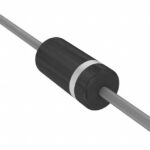 1N5399G-T
The activity of extra discounts on wholesale prices is in full swing…
Please fill in your contact information and we will send you the latest wholesale price list.







