 ChipApex | Global Electronic Components Supplier
SEARCH
Search Product
Search Post
— IC芯片 | 连接器 | 传感器 | 被动器件 —
Search productSearch post
— IC芯片 | 连接器 | 传感器 | 被动器件 —
Consult the customer manager about the wholesale price.
consultation hotline:86-132-6715-2157
email:[email protected]
Contact the product manager for consultation. One-stop consultation is available.
Do you want a lower wholesale price? Please send us your inquiry and we will reply immediately.
The Vishay 1N5403-E3/54 is a silicon general-purpose plastic rectifier diode housed in the DO-201AD axial package. It provides a maximum average forward rectified current of 3.0 A and a maximum repetitive peak reverse voltage of 300 V. The device supports a peak forward surge current of 200 A under an 8.3 ms single half-sine-wave condition. Electrical characteristics include a maximum instantaneous forward voltage of 1.2 V at 3.0 A and a maximum DC reverse current of 5.0 μA at rated blocking voltage. The component operates within a junction and storage temperature range of -50 to +150 °C.
Verify the specific ordering suffix against the manufacturer's official documentation to confirm the delivery mode and base quantity. The /54 designation indicates a paper tape and reel configuration, while other suffixes may denote different packaging formats such as ammo packs. Ensure that the procurement specifications align with the required mechanical data and material categorization compliance standards defined by Vishay.
Select this component when a standard recovery rectifier with a 300 V reverse voltage rating is required for general-purpose applications. The DO-201AD package accommodates through-hole mounting, suitable for designs requiring robust thermal performance up to 150 °C. Consider the 200 A surge current capacity for circuits subject to high inrush currents or transient loads during startup phases.
This part belongs to the 1N5400 through 1N5408 series of general-purpose plastic rectifiers manufactured by Vishay General Semiconductor. The series shares identical mechanical dimensions and thermal ratings, differing primarily in their maximum repetitive peak reverse voltage ratings which range from 50 V to 1000 V. The E3 suffix denotes RoHS compliance and matte tin plating.
Compatible substitutes within the same series include 1N5400, 1N5401, 1N5402, 1N5404, 1N5405, 1N5406, 1N5407, and 1N5408. Verify that the alternative part number matches the required 300 V reverse voltage specification before implementation.
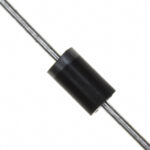 1N5403-E3/54
The activity of extra discounts on wholesale prices is in full swing…
Please fill in your contact information and we will send you the latest wholesale price list.





