 ChipApex | Global Electronic Components Supplier
SEARCH
Search Product
Search Post
— IC芯片 | 连接器 | 传感器 | 被动器件 —
Search productSearch post
— IC芯片 | 连接器 | 传感器 | 被动器件 —
Consult the customer manager about the wholesale price.
consultation hotline:86-132-6715-2157
email:[email protected]
Contact the product manager for consultation. One-stop consultation is available.
Do you want a lower wholesale price? Please send us your inquiry and we will reply immediately.
The MCC 1N5817-BP is a Schottky barrier rectifier housed in the DO-41 axial lead package. It features a maximum repetitive peak reverse voltage of 20 V and an average rectified forward current rating of 1 A. The device exhibits a low forward voltage drop, with a maximum value of 0.60 V at 1 A and 25°C. Electrical characteristics include a maximum non-repetitive peak surge current of 30 A and a junction-to-ambient thermal resistance of 75 °C/W. The component operates within a junction temperature range of -55°C to 125°C.
Verify authenticity by purchasing directly from Micro Commercial Components or authorized distributors due to industry counterfeiting risks. Confirm the -BP suffix indicates bulk packaging containing one thousand pieces per box. Ensure RoHS compliance requirements are met, noting that the 'P' suffix designates lead-free finish according to manufacturer specifications.
Select this component for low voltage applications requiring high efficiency and minimal conduction losses. The DO-41 through-hole package suits manual assembly or standard PCB mounting processes. Consider the 20 V reverse voltage rating when designing circuits with potential voltage spikes exceeding this limit.
This part belongs to the 1N5817 series of axial power Schottky rectifiers manufactured by Micro Commercial Components. The series includes variants with different voltage ratings such as the 1N5818 and 1N5819. The -BP suffix specifically denotes bulk packaging configuration rather than altering electrical performance parameters.
Compatible substitutes include the 1N5817-TP and 1N5817-AP from the same manufacturer family. Cross-manufacturer equivalents must match the 20 V reverse voltage, 1 A current rating, and DO-41 package dimensions to ensure functional interchangeability.
The -BP suffix designates that the components are supplied in bulk packaging, typically one thousand pieces per box.
No, the suffix only indicates the packaging method. Electrical characteristics remain identical across TP, AP, and BP variants.
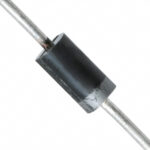 1N5817-BP
The activity of extra discounts on wholesale prices is in full swing…
Please fill in your contact information and we will send you the latest wholesale price list.





