ChipApex | Global Electronic Components Supplier
SEARCH
Search Product
Search Post
— IC芯片 | 连接器 | 传感器 | 被动器件 —
Search productSearch post
— IC芯片 | 连接器 | 传感器 | 被动器件 —
Consult the customer manager about the wholesale price.
consultation hotline:86-132-6715-2157
email:[email protected]
Contact the product manager for consultation. One-stop consultation is available.
Do you want a lower wholesale price? Please send us your inquiry and we will reply immediately.
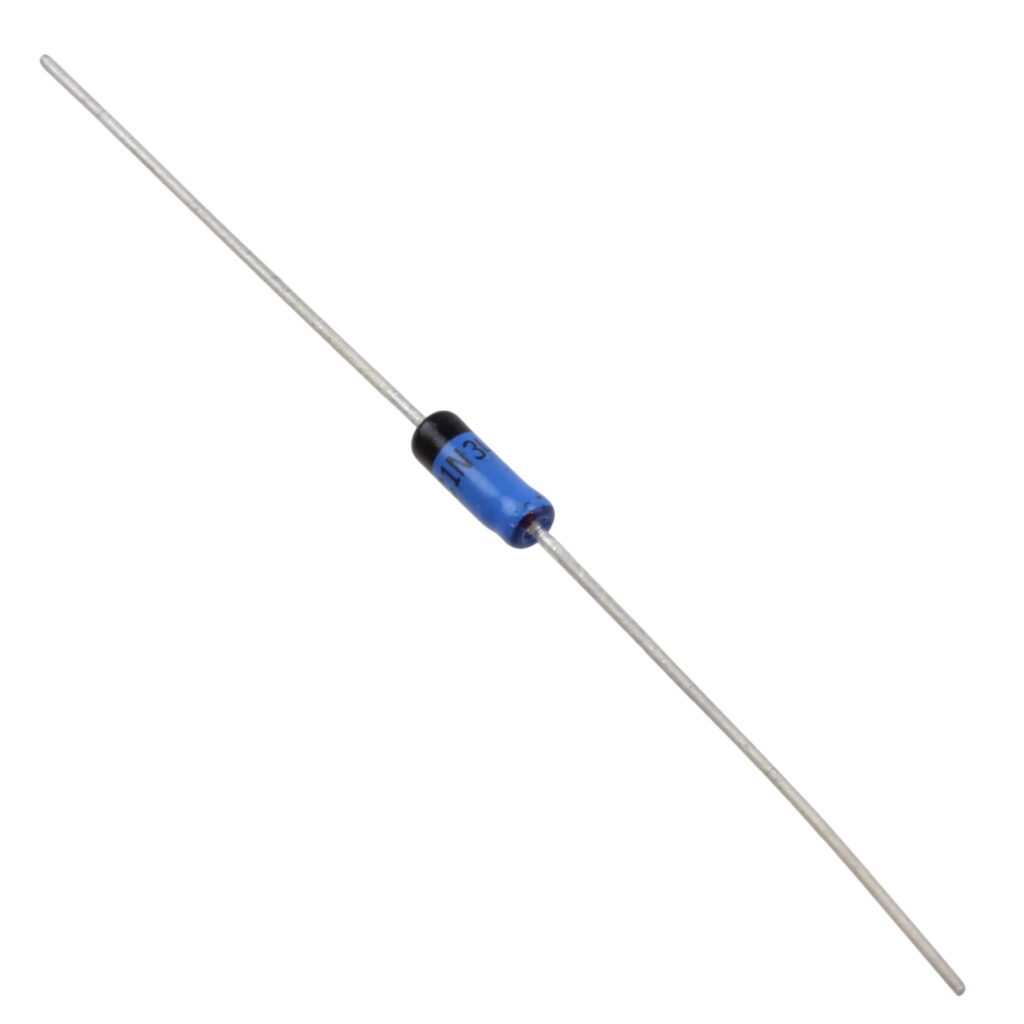
The onsemi 1N5818RLG is a Schottky Barrier Rectifier with a 30 V peak repetitive reverse voltage and a 1.0 A average rectified forward current rating. It utilizes large area metal-to-silicon power diode technology featuring chrome barrier metal, epitaxial construction, oxide passivation, and metal overlap contact. The device operates within a junction temperature range of -65°C to +125°C and withstands non-repetitive peak surge currents up to 25 A. It is housed in an Axial Lead DO-41 package (Case 59) and is manufactured as a Pb-Free device.
Verify the specific ordering suffix 'RLG' corresponds to the Tape & Reel shipping configuration containing 5000 units per reel. Confirm that the component meets Pb-Free requirements as indicated by the datasheet designation. Ensure compatibility with the specified axial lead mechanical dimensions and thermal resistance characteristics during integration.
Select this component when a 30 V blocking capability is required alongside high-efficiency switching performance. The low forward voltage drop minimizes power loss compared to standard junction diodes. Consider the thermal resistance parameters and mounting method to ensure operation remains within the maximum allowable ambient temperature limits under expected load conditions.
This part belongs to the 1N5817/1N5818/1N5819 series of Axial Lead Rectifiers from onsemi. The series shares identical physical packaging and general electrical characteristics, differentiated primarily by their rated Peak Repetitive Reverse Voltage levels of 20 V, 30 V, and 40 V respectively.
Cross-reference with other manufacturers offering 1A, 30V Schottky Rectifiers in the DO-41 package. Verify that substitute parts match the maximum ratings, specifically the 30 V reverse voltage and 1.0 A forward current, to ensure circuit compatibility.
The maximum non-repetitive peak surge current is 25 A for one cycle at half-wave, single phase 60 Hz.
Due to majority carrier conduction, it lacks minority carrier storage effects, allowing satisfactory operation up to several megahertz without reverse recovery transients.
 1N5818RLG
The activity of extra discounts on wholesale prices is in full swing…
Please fill in your contact information and we will send you the latest wholesale price list.