ChipApex | Global Electronic Components Supplier
SEARCH
Search Product
Search Post
— IC芯片 | 连接器 | 传感器 | 被动器件 —
Search productSearch post
— IC芯片 | 连接器 | 传感器 | 被动器件 —
Consult the customer manager about the wholesale price.
consultation hotline:86-132-6715-2157
email:[email protected]
Contact the product manager for consultation. One-stop consultation is available.
Do you want a lower wholesale price? Please send us your inquiry and we will reply immediately.
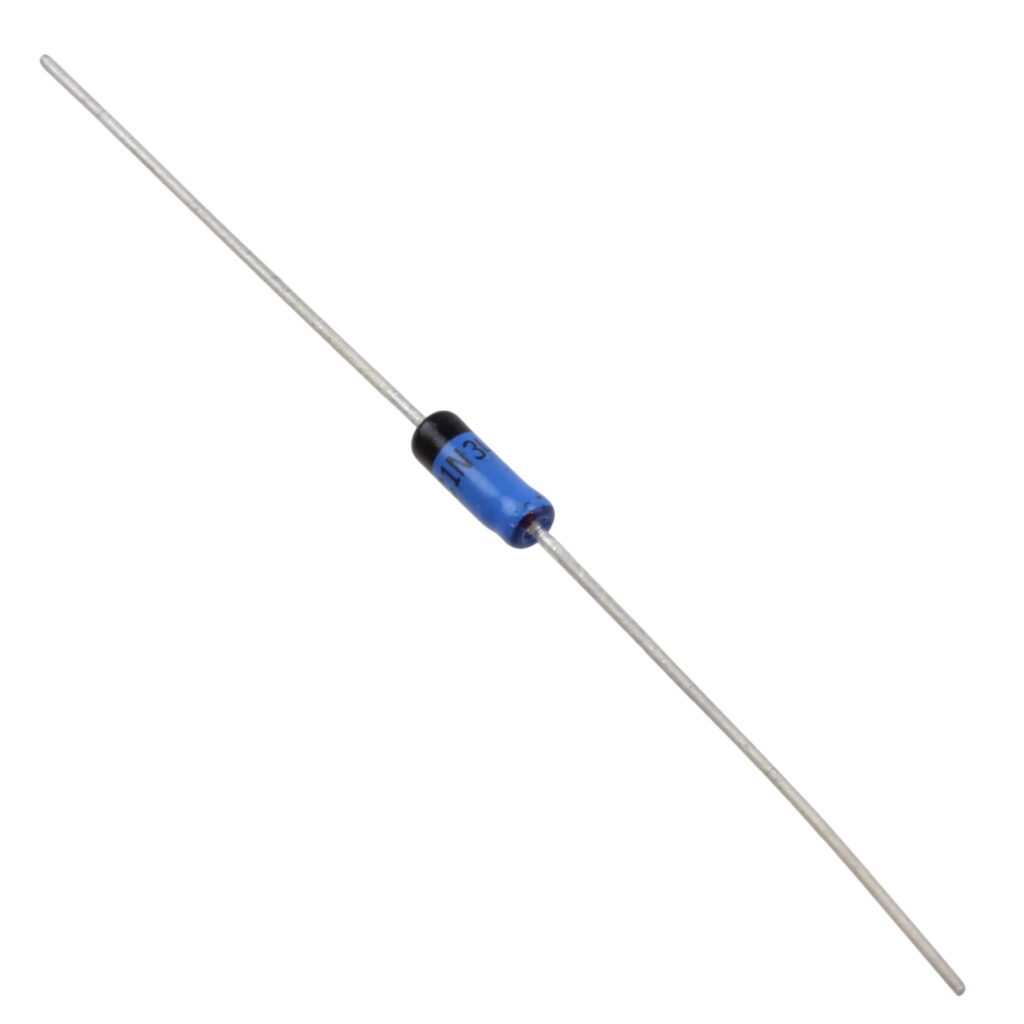
The 1N5819-E3/73 is a Schottky Barrier Plastic Rectifier manufactured by Vishay General Semiconductor - Diodes Division. It features a DO-41 (DO-204AL) axial package and operates with a maximum repetitive peak reverse voltage of 40 V and a maximum average forward rectified current of 1.0 A. The device exhibits a maximum instantaneous forward voltage of 0.600 V at 1.0 A and a typical junction capacitance of 110 pF at 4.0 V and 1.0 MHz. It supports a peak forward surge current of 25 A and functions within an operating junction temperature range of -65 to +125 °C.
Verify the specific ordering suffix /73 corresponds to the required ammo pack packaging configuration, as other suffixes indicate different delivery modes such as paper tape and reel. Confirm RoHS compliance status via official documentation, noting that the E3 suffix indicates RoHS-compliant commercial grade material. Ensure technical parameters align with application requirements before procurement.
Select this component for circuits requiring low forward voltage drop and extremely fast switching speeds. The DO-41 through-hole package facilitates standard PCB mounting. Verify thermal management capabilities against the specified junction temperature limits and derating curves. Consider the avalanche capability specification if transient voltage events are expected in the circuit design.
This part belongs to the 1N5817, 1N5818, and 1N5819 series of Schottky Barrier Plastic Rectifiers. The 1N5819 variant specifically offers a 40 V reverse voltage rating, distinguishing it from the 20 V and 30 V options available in the same family. All variants share similar mechanical data and feature sets, including guardring protection and matte tin plated leads.
Direct substitutes within the same Vishay series include the 1N5817 and 1N5818, provided their respective reverse voltage ratings meet the circuit requirements. Cross-manufacturer replacements must match the 1 A forward current, 40 V reverse voltage, and DO-41 package constraints.
The guardring is designed to provide overvoltage protection for the device.
No, the E3 suffix indicates RoHS-compliant commercial grade material and meets JESD 201 class 1A whisker test requirements, but does not change the electrical function.
 1N5819-E3/73
The activity of extra discounts on wholesale prices is in full swing…
Please fill in your contact information and we will send you the latest wholesale price list.