 ChipApex | Global Electronic Components Supplier
SEARCH
Search Product
Search Post
— IC芯片 | 连接器 | 传感器 | 被动器件 —
Search productSearch post
— IC芯片 | 连接器 | 传感器 | 被动器件 —
Consult the customer manager about the wholesale price.
consultation hotline:86-132-6715-2157
email:[email protected]
Contact the product manager for consultation. One-stop consultation is available.
Do you want a lower wholesale price? Please send us your inquiry and we will reply immediately.
The Microchip Technology 1N5822 is a single silicon Schottky barrier rectifier designed for low voltage and high frequency applications. It features an average forward current of 3A and a maximum repetitive peak reverse voltage of 40V. The device utilizes the SQ-MELF surface-mount package, offering a compact form factor suitable for space-constrained designs. Key electrical characteristics include a typical forward voltage drop of 525mV at 3A and a maximum reverse leakage current of 2mA at 40V. The component supports a junction temperature range from -65°C to 125°C.
Verify the specific ordering suffix when purchasing, as it determines the package type and tape/reel specifications. Confirm RoHS compliance status directly with the manufacturer or authorized distributors, as historical data indicates variations across different production runs and suffixes. Ensure the selected variant matches the required surface-mount footprint for PCB integration.
Select this component for designs requiring efficient rectification in low-voltage, high-frequency environments. The SQ-MELF package is ideal for automated surface-mount assembly processes where board space is limited. Consider the thermal management requirements associated with the 3A continuous current rating and the specific forward voltage characteristics at operating temperatures.
This part belongs to the standard 1N58xx series of Schottky rectifiers, widely recognized for their reliability in power conversion applications. Microchip Technology produces this device using silicon planar technology, ensuring consistent performance across industrial and commercial sectors. The component serves as a direct replacement for legacy axial lead versions in modern surface-mount designs.
Direct substitutes include the Vishay 1N5822-E3/51 and onsemi 1N5822G, though these utilize DO-201AD axial packages rather than the SQ-MELF surface-mount format. When replacing, verify that the alternative component meets the same 40V reverse voltage and 3A current ratings while accommodating the physical mounting constraints of the circuit board.
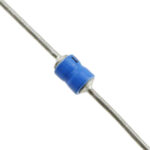 1N5822
The activity of extra discounts on wholesale prices is in full swing…
Please fill in your contact information and we will send you the latest wholesale price list.






