 ChipApex | Global Electronic Components Supplier
SEARCH
Search Product
Search Post
— IC芯片 | 连接器 | 传感器 | 被动器件 —
Search productSearch post
— IC芯片 | 连接器 | 传感器 | 被动器件 —
Consult the customer manager about the wholesale price.
consultation hotline:86-132-6715-2157
email:[email protected]
Contact the product manager for consultation. One-stop consultation is available.
Do you want a lower wholesale price? Please send us your inquiry and we will reply immediately.
The 1N6073/TR is a silicon rectifier diode manufactured by Microchip Technology, designed for general-purpose rectification applications. It features an axial through-hole package configuration suitable for standard PCB mounting. The device is characterized by a maximum repetitive peak reverse voltage of 50V and an average forward rectified current rating of 850mA. Key electrical parameters include a maximum DC forward voltage drop of 2.04V at a forward current of 9.4A and a non-repetitive peak forward surge current capability of 35A. The component operates within a junction temperature range extending up to +155°C and is supplied in tape-and-reel packaging for automated assembly processes.
Verify the specific suffix /TR confirms tape-and-reel packaging when ordering for automated surface mount or through-hole insertion lines. Confirm that the 850mA average current rating aligns with your thermal management design, as higher ambient temperatures may require derating. Ensure the 50V reverse voltage withstands any transient spikes present in your target application circuit to prevent breakdown.
Select this component when a robust axial leaded diode is required for moderate current rectification tasks. The 50V rating makes it suitable for low-voltage DC systems. Consider the 2.04V forward voltage drop impact on efficiency if operating near the 9.4A surge limit. Compare against faster recovery diodes if high-frequency switching is involved, as this is a standard rectifier type.
This part belongs to Microchip Technology's discrete semiconductor portfolio, specifically within their rectifier diode line. It serves as a reliable solution for basic power conversion needs where cost-effectiveness and ruggedness are prioritized over ultra-fast switching speeds. The axial package ensures compatibility with legacy and modern through-hole manufacturing techniques.
Direct substitutes must match the 50V reverse voltage, 850mA average current, and axial package form factor. Verify equivalent forward voltage characteristics to ensure similar power loss profiles. Check manufacturer datasheets for pinout compatibility and thermal resistance values before integrating alternative components into existing designs.
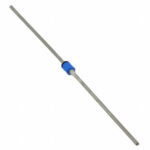 1N6073/TR
The activity of extra discounts on wholesale prices is in full swing…
Please fill in your contact information and we will send you the latest wholesale price list.





