 ChipApex | Global Electronic Components Supplier
SEARCH
Search Product
Search Post
— IC芯片 | 连接器 | 传感器 | 被动器件 —
Search productSearch post
— IC芯片 | 连接器 | 传感器 | 被动器件 —
Consult the customer manager about the wholesale price.
consultation hotline:86-132-6715-2157
email:[email protected]
Contact the product manager for consultation. One-stop consultation is available.
Do you want a lower wholesale price? Please send us your inquiry and we will reply immediately.
The Microchip Technology 1N6336US/TR is a surface-mount Zener voltage regulator in the B-SQ MELF package. It provides a nominal Zener voltage of 33 V with a standard tolerance of ±5%. The device operates at a test current of 3.8 mA and exhibits a dynamic impedance of 40 Ohms. It supports a maximum steady-state power dissipation of 0.5 W and functions within a junction temperature range of -65 °C to +175 °C.
Verify the specific reliability level (JAN, JANTX, JANTXV, or JANS) required for the application, as these levels dictate the manufacturing lot traceability and screening standards. Confirm RoHS compliance status if environmental regulations apply, noting that compliant versions are available only on commercial grades. Ensure the tape and reel packaging meets EIA-481-B standards for automated assembly processes.
Select this component when a robust, hermetically sealed surface-mount Zener diode is needed for critical systems. The 1N6336US/TR serves as the direct surface-mount equivalent to the axial-leaded 1N6336D. Consider the thermal resistance characteristics and derating curves for PCB layout to ensure operation remains within the specified junction temperature limits under all expected load conditions.
This part belongs to the 1N6309US through 1N6355US series of industry-recognized 0.5 watt Zener voltage regulators. The series offers extensive selections from 2.4 to 200 volts with various tolerance options. These devices utilize a B-SQ MELF package, providing a compact surface-mount solution that maintains the performance and reliability standards of traditional axial-leaded components.
Direct replacements include other parts within the 1N6309US thru 1N6355US series that share the same B-SQ MELF package and electrical specifications. Verify that any substitute matches the required military qualification level and metallurgical bond category (Category I or III) to maintain system integrity.
Category I bonds are used for the 1N6321US through 1N6355US devices, while Category III bonds are utilized for the 1N6309US through 1N6320US devices.
No, the device is inherently non-sensitive to electrostatic discharge as verified by MIL-STD-750 method 1020.
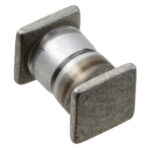 1N6336US/TR
The activity of extra discounts on wholesale prices is in full swing…
Please fill in your contact information and we will send you the latest wholesale price list.





