 ChipApex | Global Electronic Components Supplier
SEARCH
Search Product
Search Post
— IC芯片 | 连接器 | 传感器 | 被动器件 —
Search productSearch post
— IC芯片 | 连接器 | 传感器 | 被动器件 —
Consult the customer manager about the wholesale price.
consultation hotline:86-132-6715-2157
email:[email protected]
Contact the product manager for consultation. One-stop consultation is available.
Do you want a lower wholesale price? Please send us your inquiry and we will reply immediately.
The Microchip Technology 1N6341US is a military-qualified Zener voltage regulator diode designed for high-reliability applications. It features a voidless hermetically sealed glass package with internal metallurgical bonds, ensuring robust construction. The device operates within a junction and storage temperature range of -65 to +175 °C and provides a nominal Zener voltage of 51.0 V at a test current of 2.5 mA. It supports a maximum steady-state power dissipation of 0.5 W and includes surge current capability.
Verify the specific reliability level (JAN, JANTX, JANTXV, or JANS) required for your application, as these levels are available separately. Confirm RoHS compliance status if environmental regulations apply, noting that RoHS compliant versions are available on commercial grade only. Ensure the ordering suffix matches the desired voltage tolerance and packaging configuration.
Select this component when a 51.0 V Zener reference is needed in a surface-mount form factor equivalent to the axial-leaded 1N6341 series. Consider the thermal resistance values (RθJEC and RθJA) for derating calculations based on end-cap or ambient temperature conditions. Verify that the operating current remains within the specified limits to maintain accurate voltage regulation across the wide temperature range.
This part belongs to the 1N6309US through 1N6355DUS series of 0.5 watt Zener voltage regulators. The series offers Zener selections from 2.4 to 200 volts with standard 5% tolerances and tighter 1% and 2% options. These industry-recognized devices are ideal for applications requiring robust, hermetically sealed components in both surface mount and axial leaded packages.
The 1N6341US serves as the surface mount MELF equivalent to the JEDEC registered axial-leaded 1N6341. When replacing, ensure the substitute maintains the same voltage tolerance and reliability qualification level. Verify that the replacement package dimensions fit the existing footprint, as the MELF package has specific terminal and body size constraints.
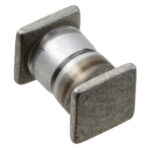 1N6341US
The activity of extra discounts on wholesale prices is in full swing…
Please fill in your contact information and we will send you the latest wholesale price list.




