 ChipApex | Global Electronic Components Supplier
SEARCH
Search Product
Search Post
— IC芯片 | 连接器 | 传感器 | 被动器件 —
Search productSearch post
— IC芯片 | 连接器 | 传感器 | 被动器件 —
Consult the customer manager about the wholesale price.
consultation hotline:86-132-6715-2157
email:[email protected]
Contact the product manager for consultation. One-stop consultation is available.
Do you want a lower wholesale price? Please send us your inquiry and we will reply immediately.
The Microchip Technology 1N6485US/TR is a surface mount Zener voltage regulator with a nominal breakdown voltage of 3.3 V and a maximum power dissipation of 1.5 W at 25°C ambient temperature. It operates within a junction and storage temperature range of -65°C to +175°C. The device features a test current (IZT) of 76.0 mA, a maximum dynamic impedance (ZZT) of 10 Ohms, and a maximum reverse leakage current of 50 µA at the specified voltage. It utilizes a voidless hermetically sealed glass MELF package.
Verify the specific qualification level required for your application, as this series offers JAN, JANTX, JANTXV, and JANS options. Confirm that the RoHS compliance status aligns with your manufacturing constraints, noting that compliant versions are available only on commercial grades. Ensure the ordering suffix matches the desired tolerance and packaging configuration before finalizing procurement.
Select this component when a 3.3 V reference is needed in a surface mount form factor with high thermal stability. Consider the 1.5 W power rating and the wide operating temperature range up to 175°C for demanding environments. Verify that the 10 Ohm dynamic impedance meets the noise and regulation requirements of the target circuit design.
This part belongs to the 1N6485US–1N6491US series of voidless hermetically sealed surface mount 1.5 Watt glass Zener diodes. These devices serve as the surface mount equivalent of popular JEDEC registered axial-lead series, providing a direct replacement option for legacy designs while offering improved mechanical robustness and space efficiency.
Direct replacements include other parts from the 1N6485US–1N6491US series or the 1N4460US–1N4496US series if pinout compatibility is maintained. Verify that substitute components meet the same MIL-PRF-19500/406 qualification levels and possess identical package dimensions for proper board integration.
The maximum continuous regulator current (IZM) for the 1N6485US is 433 mA.
Yes, the device is inherently radiation hard as described in Microsemi MicroNote 050.
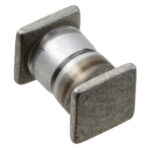 1N6485US/TR
The activity of extra discounts on wholesale prices is in full swing…
Please fill in your contact information and we will send you the latest wholesale price list.





