ChipApex | Global Electronic Components Supplier
SEARCH
Search Product
Search Post
— IC芯片 | 连接器 | 传感器 | 被动器件 —
Search productSearch post
— IC芯片 | 连接器 | 传感器 | 被动器件 —
Consult the customer manager about the wholesale price.
consultation hotline:86-132-6715-2157
email:[email protected]
Contact the product manager for consultation. One-stop consultation is available.
Do you want a lower wholesale price? Please send us your inquiry and we will reply immediately.
The 1N6677UR-1 is a silicon Schottky barrier rectifier manufactured by Microchip Technology. It features a single diode configuration housed in a DO-35 surface-mount package with round-end leads. The device supports a maximum repetitive reverse voltage of 40 V and an average forward current rating of 200 mA. Key electrical parameters include a maximum forward voltage of 700 mV, a peak forward surge current capability of 5 A, and a maximum reverse leakage current of 600 uA. It operates within a temperature range of -65 C to +150 C.
Verify the specific suffix UR-1 against official Microchip documentation to confirm the round-end lead form factor and surface mount compatibility. Ensure the procurement specification matches the required 40 V reverse voltage and 200 mA current ratings. Confirm RoHS compliance status directly with the manufacturer or authorized distributors, as commercial variants may differ from military qualified versions.
Select this component when a surface mount solution is required for low-voltage, high-efficiency rectification. The DO-35 SMT package offers a compact footprint compared to traditional through-hole equivalents. Consider the 700 mV forward voltage drop and 600 uA leakage current limits to ensure they align with the thermal and efficiency constraints of the target circuit design.
This part belongs to the 1N6675-1 through 1N6677-1 series of Schottky barrier rectifiers. While the standard 1N6677-1 is available in axial through-hole packages, the UR-1 variant specifically denotes the surface mount configuration. The series provides options for 200 mA and 500 mA ratings, with the 1N6677-1 also offering military qualifications such as JAN, JANTX, and JANS.
Direct substitutes include other 40 V, 200 mA Schottky diodes in the DO-35 SMT package. Verify pinout compatibility and thermal resistance characteristics before substitution. Cross-reference with Microchip's official replacement guides for equivalent performance in terms of forward voltage and reverse leakage.
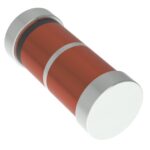 1N6677UR-1
The activity of extra discounts on wholesale prices is in full swing…
Please fill in your contact information and we will send you the latest wholesale price list.