 ChipApex | Global Electronic Components Supplier

SEARCH
Search Product
Search Post
— IC芯片 | 连接器 | 传感器 | 被动器件 —
Search productSearch post
— IC芯片 | 连接器 | 传感器 | 被动器件 —
Consult the customer manager about the wholesale price.
consultation hotline:86-132-6715-2157
email:[email protected]
Contact the product manager for consultation. One-stop consultation is available.
Do you want a lower wholesale price? Please send us your inquiry and we will reply immediately.
The Altera 1SX250HU3F50E3XG is a Stratix 10 SX Field Programmable Gate Array (FPGA) System on Chip (SoC). It integrates 2,500,000 logic elements and 821,150 Adaptive Logic Modules (ALMs) with 195 Mbit of embedded memory. The device features 1,160 I/Os and operates within a voltage range of 770 mV to 970 mV, with a typical operating voltage of 940 mV. It supports data rates up to 28.3 Gb/s across its transceivers. The component is housed in an FBGA-2397 package and functions within a temperature range of 0°C to +100°C.
Verify the specific suffix codes against official Intel/Altera documentation to confirm package type, temperature grade, and humidity sensitivity level. Ensure compatibility with required PCB footprint and thermal management solutions. Confirm RoHS compliance status and lead times directly with authorized distributors or the manufacturer, as availability varies by region and production cycle.
Select this model when designs require a balance of high logic density and embedded processing capabilities within the Stratix 10 SX family. Compare against the 1SG series if lower power consumption is critical, or the 1SX series variants if different package sizes or industrial temperature ranges are needed. Validate that the 2397-pin FBGA package fits the mechanical constraints of the target system.
This component belongs to the Intel Stratix 10 SX FPGA SoC family, designed for mid-to-high-end applications requiring efficient compute performance. It shares architectural similarities with other Stratix 10 devices but offers specific resource scaling suitable for cost-sensitive high-performance designs. The SX series typically targets applications where power efficiency and moderate logic density are prioritized over the highest possible bandwidth found in GX or TX variants.
Direct replacements include other Stratix 10 SX models such as 1SX250HH3F55E3XG or 1SX250LN3F43E3YG, depending on package size and temperature requirements. Cross-family migration to Agilex 3 may be considered for future-proofing, though pinouts and software flows will differ significantly.
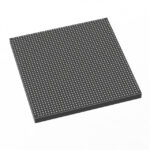 1SX250HU3F50E3XG

The activity of extra discounts on wholesale prices is in full swing…
Please fill in your contact information and we will send you the latest wholesale price list.




