 ChipApex | Global Electronic Components Supplier

SEARCH
Search Product
Search Post
— IC芯片 | 连接器 | 传感器 | 被动器件 —
Search productSearch post
— IC芯片 | 连接器 | 传感器 | 被动器件 —
Consult the customer manager about the wholesale price.
consultation hotline:86-132-6715-2157
email:[email protected]
Contact the product manager for consultation. One-stop consultation is available.
Do you want a lower wholesale price? Please send us your inquiry and we will reply immediately.
The Altera 1SX280LN3F43E2VGS2 is a Stratix 10 SX System on Chip FPGA featuring 2,800K logic elements and an embedded quad-core ARM Cortex-A53 processor running at 1.5GHz. It includes 256KB of RAM and supports up to 1160 I/Os within a 1760-ball FCBGA package measuring 42.5x42.5 mm. The device operates between 0°C and 100°C junction temperature with core voltages ranging from 770mV to 970mV. It integrates 48 transceivers capable of 28.3 Gb/s data rates and provides connectivity via Ethernet, USB OTG, SPI, I2C, UART/USART, MMC/SD/SDIO, and EBI/EMI interfaces.
Verify the complete ordering part number matches the required suffixes for package, speed grade, and temperature range. Confirm that the design utilizes a PMBus-compliant voltage regulator if SmartVID functionality is intended, as improper power supply configuration may prevent device configuration. Ensure compliance with export regulations regarding this specific semiconductor component before finalizing purchase orders.
Select this model when a combination of substantial logic capacity and embedded processing is required within a compact BGA footprint. Consider the Stratix 10 SX family for applications demanding high-speed transceiver performance alongside general-purpose computing. Evaluate power budget constraints carefully due to the variable core voltage requirements and ensure thermal management solutions support the specified junction temperature limits during operation.
This component belongs to the Intel (formerly Altera) Stratix 10 SX series, designed for system-level integration. It combines the programmability of an FPGA with the efficiency of an ARM processor. The 1SX280 variant represents a specific logic density tier within the SX family, balancing resource availability with power consumption for mid-to-high-end embedded applications.
Direct pin-compatible replacements are not publicly documented for this specific suffix configuration. Designers should evaluate other Stratix 10 SX devices with similar logic counts or consider migration to Agilex families for future-proofing, noting significant architectural and pinout differences.
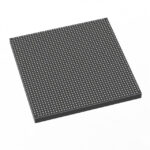 1SX280LN3F43E2VGS2

The activity of extra discounts on wholesale prices is in full swing…
Please fill in your contact information and we will send you the latest wholesale price list.




