ChipApex | Global Electronic Components Supplier
SEARCH
Search Product
Search Post
— IC芯片 | 连接器 | 传感器 | 被动器件 —
Search productSearch post
— IC芯片 | 连接器 | 传感器 | 被动器件 —
Consult the customer manager about the wholesale price.
consultation hotline:86-132-6715-2157
email:[email protected]
Contact the product manager for consultation. One-stop consultation is available.
Do you want a lower wholesale price? Please send us your inquiry and we will reply immediately.
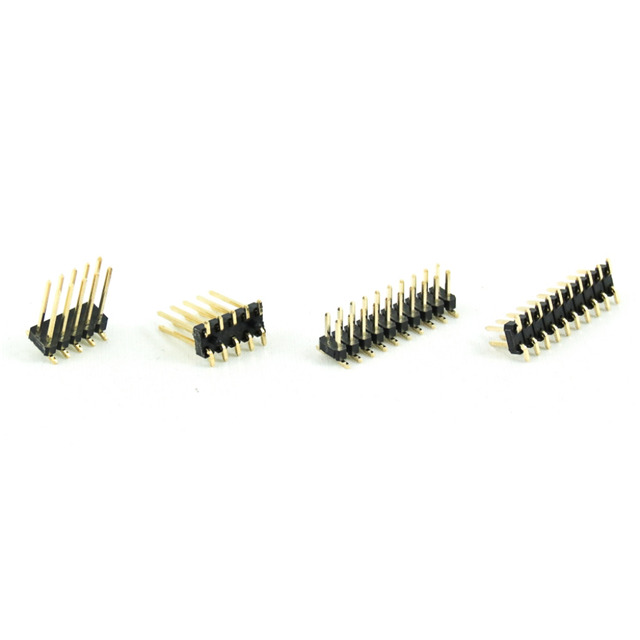
The Oupiin 2115-2X04G00DN/4U is a surface mount board connector designed for male pin applications. It features an 8-position configuration with a single row of contacts. The component utilizes a 2.0mm (0.079 inch) pitch, ensuring precise alignment and reliable electrical connections in compact circuit designs. Constructed as a header type, it employs solder terminals for secure attachment to printed circuit boards. The straight mounting orientation facilitates standard assembly processes, while the locking mechanism enhances mechanical stability during operation.
Verify that the specific suffix /4U matches the required lead-free or halogen-free compliance standards mandated by your project specifications. Confirm the surface mount footprint dimensions align precisely with your PCB design library to ensure proper solder joint formation. Check for any regional regulatory restrictions regarding the insulating materials used in this connector series before finalizing procurement orders.
Choose this component when a low-profile surface mount solution is required for high-density board layouts. The 2.0mm pitch offers a balance between signal density and manufacturing ease compared to finer pitches. Ensure the mating connector supports the same pitch and contact gender to guarantee compatibility. Consider thermal management requirements if the application involves significant current flow through the pins.
This part belongs to the Oupiin 2115 series, which specializes in 2.0mm pitch headers. The series includes various configurations such as right-angle options and different insulation heights. The 2115-2X variant specifically denotes the double-row or specific housing style within this product line, tailored for surface mount applications requiring reliable performance in space-constrained environments.
Direct substitutes must match the 2.0mm pitch, 8-position count, and surface mount termination style. Verify that alternative manufacturers offer identical housing locking mechanisms and compatible mating interfaces. Cross-reference the physical dimensions to ensure fit within the designated PCB area without interference from adjacent components.
 2115-2X04G00DN/4U
The activity of extra discounts on wholesale prices is in full swing…
Please fill in your contact information and we will send you the latest wholesale price list.