 ChipApex | Global Electronic Components Supplier

SEARCH
Search Product
Search Post
— IC芯片 | 连接器 | 传感器 | 被动器件 —
Search productSearch post
— IC芯片 | 连接器 | 传感器 | 被动器件 —
Consult the customer manager about the wholesale price.
consultation hotline:86-132-6715-2157
email:[email protected]
Contact the product manager for consultation. One-stop consultation is available.
Do you want a lower wholesale price? Please send us your inquiry and we will reply immediately.
24LC32AT-I/MNY is listed in the Memory IC range at ChipApex. The manufacturer field lists Microchip Technology. Its product description is IC EEPROM 32KBIT I2C 8TDFN. Review the specifications below when checking this part for your BOM.
The Microchip Technology 24LC32AT-I/MNY is a 32-Kbit Electrically Erasable PROM (EEPROM) organized as a single block of 4K x 8-bit memory. It features a two-wire I2C compatible serial interface with a maximum clock frequency of 400 kHz for VCC between 2.5V and 5.5V, or 100 kHz for VCC below 2.5V. The device operates within a supply voltage range of 2.5V to 5.5V and supports an industrial temperature range of -40°C to +85°C. It utilizes an 8-lead TDFN package.
Verify that the specific ordering suffix corresponds to the TDFN package type and Industrial temperature grade. Confirm RoHS compliance status and ensure the voltage range matches the application requirements, as this variant requires a minimum of 2.5V. Cross-reference the datasheet revision date to confirm current specifications.
Select this component for designs requiring a 32-Kbit EEPROM with I2C connectivity in a compact surface-mount form factor. Ensure the system voltage remains above 2.5V to maintain 400 kHz operation. Consider the 32-byte page buffer size when designing write algorithms to optimize performance and avoid page boundary overwrites.
This part belongs to the 24LC32A family of 32-Kbit I2C Serial EEPROMs manufactured by Microchip Technology. The family offers various package options including MSOP, SOIC, and DFN. The 'I' designation indicates the Industrial temperature range, while 'MNY' specifies the 8-lead TDFN package configuration.
Direct substitutes include other 24LC32A variants with different packages such as 24LC32AT-I/MS or 24LC32AT-I/MC. Verify pin compatibility and voltage specifications before substitution.
The maximum clock frequency is 400 kHz when the supply voltage (VCC) is between 2.5V and 5.5V. If VCC is below 2.5V, the maximum frequency is limited to 100 kHz.
The WP pin allows users to write-protect the entire array. When the WP pin is tied to VCC, write operations are inhibited. When tied to VSS, write protection is disabled.
Explore related parts through Memory, Integrated Circuits (ICs), all product categories, ChipApex homepage.
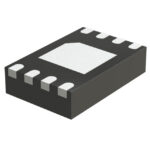 24LC32AT-I/MNY

The activity of extra discounts on wholesale prices is in full swing…
Please fill in your contact information and we will send you the latest wholesale price list.





