 ChipApex | Global Electronic Components Supplier
SEARCH
Search Product
Search Post
— IC芯片 | 连接器 | 传感器 | 被动器件 —
Search productSearch post
— IC芯片 | 连接器 | 传感器 | 被动器件 —
Consult the customer manager about the wholesale price.
consultation hotline:86-132-6715-2157
email:[email protected]
Contact the product manager for consultation. One-stop consultation is available.
Do you want a lower wholesale price? Please send us your inquiry and we will reply immediately.
The Microchip Technology 25LC020A-E/ST is a 2 Kbit (256 x 8-bit) Serial Electrically Erasable Programmable Read-Only Memory (EEPROM). It features a maximum clock frequency of 10 MHz and operates within a supply voltage range of 2.5 V to 5.5 V. The device supports up to 1,000,000 erase/write cycles with data retention exceeding 200 years. It utilizes an SPI-compatible serial bus for communication and includes block write protection capabilities.
Verify the specific suffix 'E' confirms the extended industrial temperature rating (-40°C to +125°C) and the 'ST' suffix indicates the SOT-23 package type. Confirm RoHS compliance status as required by your manufacturing standards. Ensure the design accommodates the 8-pin SOT-23 footprint dimensions and thermal characteristics specified in the datasheet packaging section.
Select this component when an SPI interface is preferred over I2C for simpler protocol implementation and higher speed requirements up to 10 MHz. The extended temperature grade is suitable for harsh environments where standard industrial ratings are insufficient. Consider the low standby current if power conservation during idle states is a critical system constraint.
This part belongs to the 25XX020A family of 2 Kbit SPI EEPROMs from Microchip Technology. It shares identical memory architecture and instruction sets with the 25AA020A variant, differing primarily in the minimum operating voltage threshold. The family provides non-volatile storage solutions for microcontroller-based applications requiring reliable data retention.
The 25LC020A-I/ST serves as a direct functional substitute with an adjusted industrial temperature range (-40°C to +85°C). Verify that the application environment remains within the lower temperature limits of the '-I' grade before swapping components.
The HOLD pin allows the host to pause serial communication without resetting the sequence. When pulled low while SCK is low, inputs are ignored and SO goes high-impedance. Communication resumes when HOLD is brought high while SCK is low.
If a page write operation attempts to cross a physical page boundary, the data wraps around to the beginning of the current page instead of writing to the next page. Application software must prevent writes that exceed the page limit.
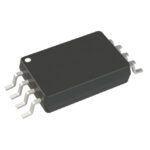 25LC020A-E/ST
The activity of extra discounts on wholesale prices is in full swing…
Please fill in your contact information and we will send you the latest wholesale price list.






