 ChipApex | Global Electronic Components Supplier
SEARCH
Search Product
Search Post
— IC芯片 | 连接器 | 传感器 | 被动器件 —
Search productSearch post
— IC芯片 | 连接器 | 传感器 | 被动器件 —
Consult the customer manager about the wholesale price.
consultation hotline:86-132-6715-2157
email:[email protected]
Contact the product manager for consultation. One-stop consultation is available.
Do you want a lower wholesale price? Please send us your inquiry and we will reply immediately.
The Microchip Technology 25LC020AT-I/MS is a 2 Kbit (256 x 8-bit) Serial Electrically Erasable Programmable Read-Only Memory (EEPROM). It interfaces via an SPI-compatible serial bus with a maximum clock frequency of 10 MHz. The device operates within a supply voltage range of 2.5 V to 5.5 V and supports industrial temperature ranges from -40°C to +85°C. Key electrical characteristics include a maximum write current of 5 mA at 5.5V, standby current of 5 µA, and data retention exceeding 200 years. It features self-timed erase and write cycles up to 5 ms.
Verify that the specific ordering suffix matches the required package type and temperature grade. Confirm the voltage range aligns with the 2.5V minimum requirement for the LC series variant. Ensure the supply chain source provides valid traceability documentation consistent with Microchip's manufacturing standards.
Select this component when a low-pin-count non-volatile memory solution is required for small data storage tasks. It is suitable for systems utilizing standard SPI controllers without complex I2C arbitration needs. Consider the MSOP package constraints regarding thermal dissipation and board space limitations during integration.
This part belongs to the 25XX020A family of serial EEPROMs manufactured by Microchip Technology. It shares architectural similarities with the 25AA020A but differs in its minimum operating voltage specification. The device is designed for direct interfacing with microcontrollers supporting SPI protocols.
The 25AA020AT-I/MS serves as a functional substitute within the same family, offering identical pinouts and instruction sets while supporting a lower 1.8V minimum supply voltage.
The HOLD pin allows the host to pause serial communication without resetting the sequence. Transitions on SI, SCK, and SO are ignored while held low, and operation resumes when the pin is brought high while SCK is low.
If a page write attempts to cross a boundary, the data wraps around to the beginning of the current page, overwriting existing data instead of proceeding to the next page.
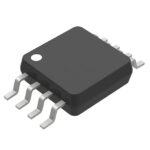 25LC020AT-I/MS
The activity of extra discounts on wholesale prices is in full swing…
Please fill in your contact information and we will send you the latest wholesale price list.





