 ChipApex | Global Electronic Components Supplier
SEARCH
Search Product
Search Post
— IC芯片 | 连接器 | 传感器 | 被动器件 —
Search productSearch post
— IC芯片 | 连接器 | 传感器 | 被动器件 —
Consult the customer manager about the wholesale price.
consultation hotline:86-132-6715-2157
email:[email protected]
Contact the product manager for consultation. One-stop consultation is available.
Do you want a lower wholesale price? Please send us your inquiry and we will reply immediately.
The Microchip Technology 25LC020AT-I/SN is a 2 Kbit (256 x 8-bit) Serial Electrically Erasable Programmable Read-Only Memory (EEPROM). It operates via a SPI-compatible serial bus with a maximum clock frequency of 10 MHz. The device supports a supply voltage range of 2.5 V to 5.5 V and features low-power CMOS technology, including a standby current of 5 µA at 5.5 V. It offers high reliability with 1,000,000 erase/write cycles and data retention exceeding 200 years. The component is housed in an 8-lead SOIC package and supports industrial temperature ranges from -40°C to +85°C.
Verify the specific ordering suffix 'SN' confirms the 8-lead SOIC package type and surface mount installation style. Ensure the 'I' designation matches the required industrial temperature range of -40°C to +85°C. Confirm RoHS compliance status if restricted material management is required for the assembly process.
Select this component when a 2 Kbit capacity is sufficient for application requirements. Choose this part over the 25AA020A variant if the system design requires a minimum operating voltage of 2.5 V rather than 1.8 V. Verify that the SPI interface timing constraints align with the master controller's capabilities.
This component belongs to the 25XX020A family of serial EEPROMs manufactured by Microchip Technology. The family includes variants with different voltage ranges and package options, such as the 25AA020A which supports lower voltages down to 1.8 V. All members share identical functional architectures and instruction sets.
Direct substitutes include other 25LC020A variants with different packages, such as 25LC020A-I/P or 25LC020A-I/MS, provided the board layout accommodates the alternative footprint.
If a page write operation attempts to cross a physical page boundary, the internal address counter wraps around to the beginning of the current page, overwriting existing data instead of proceeding to the next page.
The HOLD pin suspends transmission to the device while maintaining the current serial sequence state. Transitions on SI, SCK, and SO are ignored during this period, allowing the host to service interrupts before resuming communication.
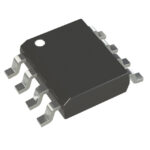 25LC020AT-I/SN
The activity of extra discounts on wholesale prices is in full swing…
Please fill in your contact information and we will send you the latest wholesale price list.





