 ChipApex | Global Electronic Components Supplier
SEARCH
Search Product
Search Post
— IC芯片 | 连接器 | 传感器 | 被动器件 —
Search productSearch post
— IC芯片 | 连接器 | 传感器 | 被动器件 —
Consult the customer manager about the wholesale price.
consultation hotline:86-132-6715-2157
email:[email protected]
Contact the product manager for consultation. One-stop consultation is available.
Do you want a lower wholesale price? Please send us your inquiry and we will reply immediately.
The Microchip Technology 25LC080D-E/ST is an 8 Kbit (1024 x 8-bit) Serial Electrically Erasable PROM featuring SPI-compatible interface. It operates within a voltage range of 2.5V to 5.5V with a maximum clock frequency of 10 MHz at VCC ≥ 4.5V. The device utilizes a 32-byte page size and supports industrial temperature ranges from -40°C to +125°C. Key electrical characteristics include a maximum write current of 5 mA, standby current of 5 µA, and data retention exceeding 200 years.
Verify the specific suffix 'E' indicates the extended temperature grade (-40°C to +125°C) and 'ST' denotes the TSSOP-8 package. Confirm that the 'D' variant provides the 32-byte page size required for your application's write efficiency. Ensure compatibility with the system's SPI voltage levels and check for any RoHS compliance documentation if required by your manufacturing standards.
Select this component when high endurance (>1M cycles) and long-term data retention are critical. The 32-byte page size offers better write throughput compared to 16-byte variants. Ensure the host controller can support the required SPI clock speeds and that the system design accommodates the necessary hold and chip select timing constraints specified in the datasheet.
This part belongs to the 25LC080C/D family of 8K SPI Serial EEPROMs. The 'D' designation specifically identifies the version with a 32-byte page buffer, distinguishing it from the 'C' version which uses a 16-byte page. The 'E' suffix denotes the automotive-grade temperature range, while 'I' would indicate the industrial range.
Direct substitutes include other 25LC080D variants with different packages (e.g., 25LC080D-E/SN for SOIC) or the 25LC080C series if 16-byte pages are acceptable. Cross-vendor replacements must match the 8-pin SPI EEPROM form factor and voltage specifications.
The primary difference is the page size. The 25LC080D supports a 32-byte page size, whereas the 25LC080C supports a 16-byte page size. Both share the same memory capacity and interface.
The HOLD pin allows the user to pause serial communication without resetting the sequence. When pulled low while SCK is low, the device ignores inputs except CS. Communication resumes when HOLD is brought high while SCK is low.
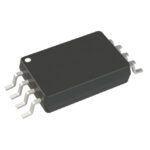 25LC080D-E/ST
The activity of extra discounts on wholesale prices is in full swing…
Please fill in your contact information and we will send you the latest wholesale price list.





