 ChipApex | Global Electronic Components Supplier
SEARCH
Search Product
Search Post
— IC芯片 | 连接器 | 传感器 | 被动器件 —
Search productSearch post
— IC芯片 | 连接器 | 传感器 | 被动器件 —
Consult the customer manager about the wholesale price.
consultation hotline:86-132-6715-2157
email:[email protected]
Contact the product manager for consultation. One-stop consultation is available.
Do you want a lower wholesale price? Please send us your inquiry and we will reply immediately.
The Microchip Technology 25LC1024T-E/MF is a 1-Mbit (131,072-byte) serial EEPROM utilizing an SPI-compatible interface. It operates within a voltage range of 2.5V to 5.5V and supports clock frequencies up to 20 MHz at higher voltages or 10 MHz at lower voltages. The device features a 256-byte page size with a maximum write cycle time of 6 ms. It is housed in an 8-lead DFN-S package and is rated for extended industrial temperatures ranging from -40°C to +125°C.
Verify that the specific suffix 'E' corresponds to the extended temperature range (-40°C to +125°C) required by your application environment. Confirm the 'MF' designation matches the 8-lead DFN-S package footprint on your PCB layout. Ensure the design accounts for the 2.5V to 5.5V supply voltage constraints during operation.
Select this component when a 1-Mbit capacity is necessary alongside SPI connectivity. The extended temperature grade is suitable for harsh environments where standard industrial grades may fail. Consider the 256-byte page size for write efficiency and verify that the system voltage aligns with the specified operating range for optimal performance.
This part belongs to the 25LC1024 series of serial EEPROMs manufactured by Microchip Technology. It shares architectural similarities with other members of the family but differs in capacity and temperature rating. The 'E' suffix specifically denotes the extended temperature variant, distinguishing it from the standard industrial 'I' version.
The 25LC1024T-I/MF serves as a direct functional substitute if the application does not require operation above +85°C. Other variants within the 25LC1024 family may be compatible provided the temperature and package specifications are verified against the new part number.
No, the device supports self-timed erase and write cycles. Byte and page writes do not require prior erasure of the memory array.
The HOLD pin allows the host to pause serial communication mid-sequence. When pulled low while SCK is low, the device ignores further inputs until HOLD is released, preserving the current address pointer.
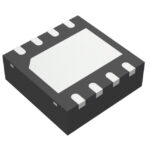 25LC1024T-E/MF
The activity of extra discounts on wholesale prices is in full swing…
Please fill in your contact information and we will send you the latest wholesale price list.





