 ChipApex | Global Electronic Components Supplier

SEARCH
Search Product
Search Post
— IC芯片 | 连接器 | 传感器 | 被动器件 —
Search productSearch post
— IC芯片 | 连接器 | 传感器 | 被动器件 —
Consult the customer manager about the wholesale price.
consultation hotline:86-132-6715-2157
email:[email protected]
Contact the product manager for consultation. One-stop consultation is available.
Do you want a lower wholesale price? Please send us your inquiry and we will reply immediately.
The Microchip Technology 25LC320A-I/SN is a 32-Kbit Serial Electrically Erasable PROM featuring a 4096 x 8-bit organization. It operates via an SPI-compatible serial bus with a maximum clock frequency of 10 MHz at VCC levels between 4.5V and 5.5V. The device supports a supply voltage range of 2.5V to 5.5V and includes a 32-byte page size for efficient writing. It is housed in an 8-lead SOIC package and functions within an industrial temperature range of -40°C to +85°C.
Verify that the ordering suffix matches the required temperature grade and package type, as these define the operational limits and physical form factor. Confirm RoHS compliance status and ensure the specific variant aligns with the system's voltage and interface requirements before finalizing procurement.
Select this component when a 32-Kbit capacity with SPI interface is required for industrial environments. Ensure the design accommodates the 2.5V to 5.5V supply range and utilizes the 8-lead SOIC footprint. Consider the 10 MHz clock limit based on the operating voltage to guarantee timing compliance.
This part belongs to the 25LC320A series of 32-Kbit SPI Serial EEPROMs from Microchip Technology. The 'I' suffix denotes the Industrial temperature rating, while '/SN' specifies the 8-lead Plastic Small Outline (SOIC) package. It complements the 25AA320A series, which offers a wider voltage range starting at 1.8V.
Direct replacements include other 25LC320A variants with different packages or temperature grades, such as 25LC320A-E/MS or 25LC320A-I/P, provided the electrical characteristics and pinout remain compatible with the existing design.
The HOLD pin allows the host to suspend transmission mid-sequence without resetting the serial pointer. It must be pulled low while SCK is low to pause, and brought high while SCK is low to resume.
The Write Enable Latch must be set via the WREN instruction before any write operation can occur. It resets automatically after power-up, a successful write, or execution of the WRDI instruction to prevent accidental data corruption.
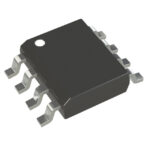 25LC320A-I/SN

The activity of extra discounts on wholesale prices is in full swing…
Please fill in your contact information and we will send you the latest wholesale price list.





