 ChipApex | Global Electronic Components Supplier

SEARCH
Search Product
Search Post
— IC芯片 | 连接器 | 传感器 | 被动器件 —
Search productSearch post
— IC芯片 | 连接器 | 传感器 | 被动器件 —
Consult the customer manager about the wholesale price.
consultation hotline:86-132-6715-2157
email:[email protected]
Contact the product manager for consultation. One-stop consultation is available.
Do you want a lower wholesale price? Please send us your inquiry and we will reply immediately.
The Microchip Technology 25LC512-E/P is a 512 Kbit (65,536 byte) SPI bus serial EEPROM housed in an 8-lead PDIP package. It operates within a VCC range of 2.5V to 5.5V and supports a maximum clock speed of 20 MHz at extended temperatures (-40°C to +125°C). The device features a 128-byte page size, self-timed write cycles up to 5 ms, and sector write protection for 16K byte sectors. It includes hardware write protection via the WP pin, deep power-down current of 1 µA at 2.5V, and endurance of 1 million erase/write cycles with data retention exceeding 200 years.
Verify that the ordering suffix 'E' corresponds to the Extended temperature range (-40°C to +125°C) and 'P' indicates the 8-lead PDIP package. Confirm the specific datasheet revision matches the required electrical characteristics. Ensure compatibility with the system's SPI voltage levels and clock frequency requirements before procurement.
Select this component when an SPI-compatible serial EEPROM with high endurance and extended temperature operation is required. The 512 Kbit capacity suits applications needing moderate non-volatile storage. The PDIP package is suitable for through-hole mounting. Verify that the 2.5V to 5.5V supply range aligns with the target system's power architecture.
The 25LC512 belongs to Microchip's 25-series SPI Serial EEPROM family. It shares functional similarities with other devices in the line but differs in memory density and package options. The -E variant specifically denotes the extended industrial temperature rating, distinguishing it from the standard industrial -I version which operates up to +85°C.
Direct substitutes include other 25LC512 variants with different packages (e.g., SOIC SN, DFN-S MF) or temperature ratings (e.g., 25LC512-I/P). Cross-referencing pinouts and electrical specifications is necessary when replacing with devices from other manufacturers.
The HOLD pin suspends transmission to the device while in the middle of a serial sequence without resetting the sequence. It must be held high when not in use and pulled low to pause communication.
The WPEN bit acts as an enable bit for the hardware write-protect (WP) pin. When WPEN is high and WP is low, writing to nonvolatile bits in the STATUS register is disabled.
Yes, the device features self-timed erase and write cycles. Byte and page write operations do not require a preceding erase cycle.
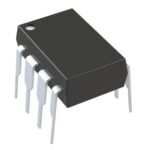 25LC512-E/P

The activity of extra discounts on wholesale prices is in full swing…
Please fill in your contact information and we will send you the latest wholesale price list.





