 ChipApex | Global Electronic Components Supplier

SEARCH
Search Product
Search Post
— IC芯片 | 连接器 | 传感器 | 被动器件 —
Search productSearch post
— IC芯片 | 连接器 | 传感器 | 被动器件 —
Consult the customer manager about the wholesale price.
consultation hotline:86-132-6715-2157
email:[email protected]
Contact the product manager for consultation. One-stop consultation is available.
Do you want a lower wholesale price? Please send us your inquiry and we will reply immediately.
The Microchip Technology 25LC512T-E/SN is a 512 Kbit (64K x 8) serial EEPROM utilizing an SPI-compatible interface. It operates within a voltage range of 2.5 V to 5.5 V and supports clock frequencies up to 20 MHz at higher voltages or 10 MHz at lower voltages. The device features byte and page-level write operations with a maximum page size of 128 bytes and a typical write cycle time of 5 ms. It includes sector write protection capabilities, allowing for the protection of none, one-quarter, one-half, or all of the memory array. The component is housed in an 8-lead SOIC package and is qualified for automotive applications under AEC-Q100 standards.
Verify that the ordering suffix 'SN' corresponds to the SOIC-8 package and 'T' indicates tape-and-reel packaging. Confirm the '-E' suffix denotes the extended temperature range (-40°C to +125°C). Ensure compatibility with the host system's SPI voltage levels and check for specific automotive qualification requirements if used in vehicle electronics.
Select this part when a 512 Kbit capacity is required with robust automotive reliability. The extended temperature range makes it suitable for harsh environments. Consider the 128-byte page size for write efficiency and verify that the SPI interface speed requirements align with the 20 MHz maximum clock specification at the operating voltage.
This component belongs to the 25LC512 family of serial EEPROMs manufactured by Microchip Technology. The family offers various package options including SOIC, PDIP, DFN-S, and SOIJ. The 'E' variant specifically extends the operational temperature range compared to the industrial 'I' version, providing greater flexibility for demanding environmental conditions.
Check for other 25LC512 variants with different packages such as 25LC512-I/SN for industrial temperature ranges. Verify cross-compatibility with similar capacity SPI EEPROMs from other manufacturers only if pinouts and command sets are identical.
No, the device supports byte and page writes directly without requiring prior sector or block erase cycles.
The HOLD pin allows the user to pause serial communication without resetting the sequence, enabling the host to service higher priority interrupts.
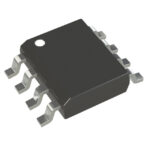 25LC512T-E/SN

The activity of extra discounts on wholesale prices is in full swing…
Please fill in your contact information and we will send you the latest wholesale price list.





