 ChipApex | Global Electronic Components Supplier

SEARCH
Search Product
Search Post
— IC芯片 | 连接器 | 传感器 | 被动器件 —
Search productSearch post
— IC芯片 | 连接器 | 传感器 | 被动器件 —
Consult the customer manager about the wholesale price.
consultation hotline:86-132-6715-2157
email:[email protected]
Contact the product manager for consultation. One-stop consultation is available.
Do you want a lower wholesale price? Please send us your inquiry and we will reply immediately.
The Microchip Technology 25LC512T-E/SN16KVAO is a 512 Kbit (64K x 8) serial EEPROM utilizing an SPI-compatible interface. It operates within a voltage range of 2.5 V to 5.5 V and supports clock frequencies up to 10 MHz at lower voltages or 20 MHz at higher voltages. The device features a 128-byte page size, 1 million erase/write cycle endurance, and data retention exceeding 200 years. It includes sector write protection, deep power-down modes, and AEC-Q100 automotive qualification. The component is housed in an 8-lead SOIC package.
Verify the specific suffix 'T' indicates tape-and-reel packaging and 'E' confirms the extended temperature grade (-40°C to +125°C). Confirm the 'SN' designation corresponds to the SOIC-8 package variant. Ensure compatibility with system voltage levels and SPI timing requirements before integration.
Select this part for applications requiring automotive-grade reliability and extended temperature ranges. The 512 Kbit capacity suits moderate data storage needs. Consider the 10 MHz maximum clock speed at 2.5V if operating at lower supply voltages. Verify that the 128-byte page size aligns with write buffer constraints in the host microcontroller design.
This component belongs to the Microchip 25LC series of SPI serial EEPROMs. It shares architectural similarities with other members like the 25LC256 and 25LC1024 but differs in memory density. The 'E' suffix denotes the extended industrial temperature range, distinguishing it from the standard industrial 'I' grade variants.
Direct substitutes include the 25LC512-I/SN for standard industrial temperature ranges or the 25LC512-E/MF for DFN-S packaging. Cross-vendor equivalents such as the AT25SL512 or M95512 may require firmware adjustments due to differing instruction sets or timing parameters.
No, the device supports auto-erase during write operations. Byte and page writes automatically trigger the necessary internal erase cycles.
The HOLD pin allows the host to pause serial communication by pulling it low while SCK is low. This suspends data transfer without resetting the address pointer, allowing the host to service interrupts before resuming.
The Release from Deep Power-Down and Read Electronic Signature (RDID) command exits deep power-down mode and outputs an 8-bit electronic signature on the SO pin for device identification.
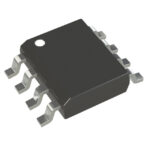 25LC512T-E/SN16KVAO

The activity of extra discounts on wholesale prices is in full swing…
Please fill in your contact information and we will send you the latest wholesale price list.





