 ChipApex | Global Electronic Components Supplier

SEARCH
Search Product
Search Post
— IC芯片 | 连接器 | 传感器 | 被动器件 —
Search productSearch post
— IC芯片 | 连接器 | 传感器 | 被动器件 —
Consult the customer manager about the wholesale price.
consultation hotline:86-132-6715-2157
email:[email protected]
Contact the product manager for consultation. One-stop consultation is available.
Do you want a lower wholesale price? Please send us your inquiry and we will reply immediately.
The Microchip Technology 25LC640A-E/MS is a 64-Kbit Serial Electrically Erasable PROM featuring an SPI-compatible serial bus interface. It utilizes low-power CMOS technology with a supply voltage range of 2.5V to 5.5V and supports maximum clock frequencies up to 10 MHz at higher voltages. The device offers 8192 x 8-bit organization, 32-byte page write capability, and self-timed erase/write cycles. It includes block write protection, power-on/off data protection, and high reliability with over 1,000,000 erase/write cycles and greater than 200 years of data retention.
Verify the specific ordering suffix matches the required package type and temperature grade. Confirm the 'E' designation indicates Extended temperature range (-40°C to +125°C) and 'MS' denotes the 8-lead MSOP package. Ensure compatibility with system voltage levels within the specified 2.5V to 5.5V operating range before finalizing procurement.
Select this component when an SPI interface is preferred over I2C for simpler protocol implementation. Choose the Extended temperature variant for environments exceeding standard industrial limits. Consider the 32-byte page size for write efficiency and verify that the 8-lead MSOP package fits the available PCB footprint constraints.
This part belongs to the 25LC640A family of 64-Kbit SPI EEPROMs from Microchip Technology. It shares architectural similarities with the 25AA640A but differs in minimum operating voltage requirements. The device is designed for applications needing reliable non-volatile storage with robust write protection mechanisms and high endurance characteristics.
The 25LC640A-I/MS serves as a direct functional substitute offering identical specifications but restricted to Industrial temperature range (-40°C to +85°C). Verify that the reduced thermal tolerance aligns with the target application environment before substituting.
The HOLD pin suspends transmission mid-sequence without resetting the serial pointer. Inputs are ignored while held low, allowing the host to service interrupts. Communication resumes when the pin returns high while SCK is low.
The WP pin works with the WPEN bit in the STATUS register to disable writes to the nonvolatile bits in the STATUS register when low. When high, all functions operate normally, allowing STATUS register updates.
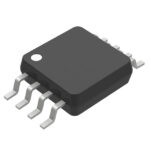 25LC640A-E/MS

The activity of extra discounts on wholesale prices is in full swing…
Please fill in your contact information and we will send you the latest wholesale price list.





