 ChipApex | Global Electronic Components Supplier

SEARCH
Search Product
Search Post
— IC芯片 | 连接器 | 传感器 | 被动器件 —
Search productSearch post
— IC芯片 | 连接器 | 传感器 | 被动器件 —
Consult the customer manager about the wholesale price.
consultation hotline:86-132-6715-2157
email:[email protected]
Contact the product manager for consultation. One-stop consultation is available.
Do you want a lower wholesale price? Please send us your inquiry and we will reply immediately.
The Microchip Technology 25LC640AXT-E/ST is a 64-Kbit Serial Electrically Erasable PROM featuring an SPI-compatible interface. It operates within a voltage range of 2.5V to 5.5V and supports clock frequencies up to 10 MHz at 5.5V. The device utilizes an 8192 x 8-bit organization with a 32-byte page size. It offers high reliability, including 1,000,000 erase/write cycles and data retention exceeding 200 years. The component is housed in an 8-lead TSSOP package and is qualified for the Automotive AEC-Q100 standard, supporting an extended temperature range from -40°C to +125°C.
Verify the specific ordering suffix 'XT' against official Microchip documentation to confirm tape-and-reel packaging specifications and any unique marking requirements. Ensure the Extended temperature grade (E) matches the operational environment constraints. Confirm RoHS compliance status through current datasheets before finalizing procurement orders.
Select this component when an SPI EEPROM with automotive qualification is required. The 25LC640A variant specifically requires a minimum supply voltage of 2.5V, unlike the 25AA640A which supports lower voltages. Consider the 8-lead TSSOP package dimensions for PCB layout compatibility. Verify that the 32-byte page write limit aligns with the application's data throughput requirements.
This part belongs to the 25XX640A family of 64-Kbit Serial EEPROMs manufactured by Microchip Technology. The family includes variants with different voltage ranges and temperature grades. The 25LC640A series is distinguished by its 2.5V minimum operating voltage compared to the 1.8V support in the 25AA640A series. All members share identical functional architectures and instruction sets.
The 25LC640AT-E/ST serves as a direct replacement for the 25LC640AXT-E/ST, differing only in the absence of the X designation which typically denotes specific reel packaging variations. Both parts share identical electrical characteristics, pinouts, and functionality. Verify package markings if traceability is critical.
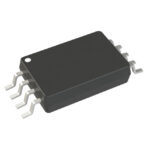 25LC640AXT-E/ST

The activity of extra discounts on wholesale prices is in full swing…
Please fill in your contact information and we will send you the latest wholesale price list.





