ChipApex | Global Electronic Components Supplier
SEARCH
Search Product
Search Post
— IC芯片 | 连接器 | 传感器 | 被动器件 —
Search productSearch post
— IC芯片 | 连接器 | 传感器 | 被动器件 —
Consult the customer manager about the wholesale price.
consultation hotline:86-132-6715-2157
email:[email protected]
Contact the product manager for consultation. One-stop consultation is available.
Do you want a lower wholesale price? Please send us your inquiry and we will reply immediately.
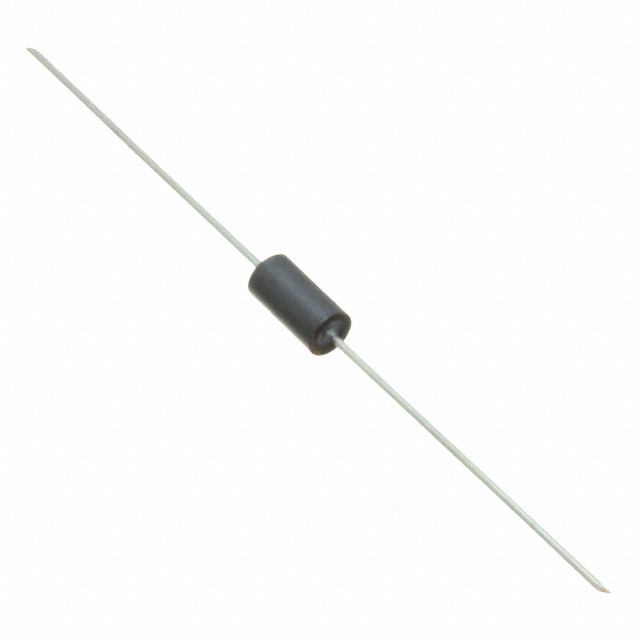
The Fair-Rite Products Corp. model 2743008112 is an axial leaded ferrite bead designed for electromagnetic interference (EMI) suppression. It utilizes Fair-Rite Material 43, providing high permeability for effective noise attenuation in the broadband frequency range. The component exhibits a nominal impedance of 180 Ohms at a test frequency of 100 MHz. It features an axial termination type and is rated for an operating temperature range from -55°C to +125°C.
Verify the specific material designation matches the required frequency response profile for your application. Confirm that the axial lead spacing and physical dimensions are compatible with your PCB footprint or cable assembly constraints. Ensure the 180 Ohm impedance value at 100 MHz aligns with the target noise frequencies. Check RoHS compliance status if restricted substances are prohibited in your manufacturing process.
Select this component when broadband noise suppression is required across lower and mid-range frequencies. Material 43 offers higher permeability than standard materials, making it suitable for applications where significant inductance is needed in a compact form factor. Consider the thermal rating of +125°C for environments with elevated ambient temperatures. Evaluate the DC resistance characteristics if current carrying capacity is a critical design parameter.
This part belongs to the Fair-Rite series of ferrite beads on leads. These components are distinct from snap-on cores as they are integrated directly onto wire leads during manufacturing. They serve as passive filters to dampen high-frequency oscillations without affecting the desired signal integrity. The axial configuration allows for easy integration into existing wiring harnesses or board layouts.
Substitute parts must maintain the same Material 43 composition to ensure equivalent magnetic properties. Verify that the replacement offers comparable impedance at 100 MHz and similar thermal stability limits. Physical lead spacing and overall length should match to fit existing mechanical constraints.
 2743008112
The activity of extra discounts on wholesale prices is in full swing…
Please fill in your contact information and we will send you the latest wholesale price list.