ChipApex | Global Electronic Components Supplier
SEARCH
Search Product
Search Post
— IC芯片 | 连接器 | 传感器 | 被动器件 —
Search productSearch post
— IC芯片 | 连接器 | 传感器 | 被动器件 —
Consult the customer manager about the wholesale price.
consultation hotline:86-132-6715-2157
email:[email protected]
Contact the product manager for consultation. One-stop consultation is available.
Do you want a lower wholesale price? Please send us your inquiry and we will reply immediately.
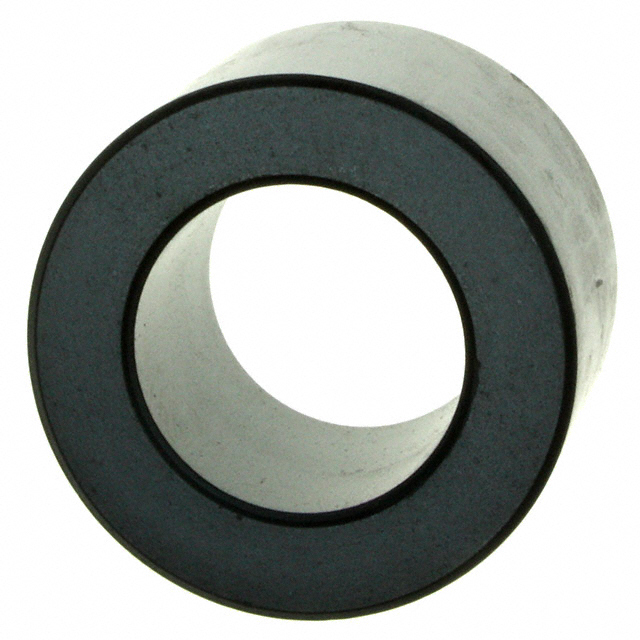
The 28B1250-000 is a solid free-hanging ferrite core manufactured by Laird-Signal Integrity Products, designed for cable suppression applications. It exhibits an impedance of 186 Ohms at 100 MHz. The component features a cylindrical geometry with an inner diameter of 0.750 inches (19.05 mm) and an outer diameter of 1.250 inches (31.75 mm). Its total length measures 0.875 inches (22.22 mm). This part belongs to the 28B series and is classified as a cable ferrite intended for EMI filtering on round cables.
Verify the specific impedance tolerance and material composition against the official datasheet before integration. Confirm that the cable diameter falls within the 19.05 mm inner diameter specification to ensure proper fit. Check for RoHS compliance status if required by your manufacturing standards. Ensure the supplier provides genuine Laird-Signal Integrity Products components to guarantee performance consistency.
Select this component when high current capacity is not the primary constraint but significant impedance at 100 MHz is required for cable-borne noise. The large physical dimensions accommodate thicker cables compared to standard bead chips. Consider the free-hanging form factor for retrofitting or applications where surface mount space is unavailable. Evaluate thermal dissipation requirements as solid cores may heat up under high-frequency transient conditions.
This ferrite core is part of Laird's extensive portfolio of passive EMI suppression components. It complements chip beads and clamp-on types by offering a robust solution for larger gauge wires. The 28B series typically utilizes specific ferrite materials tuned for broadband noise absorption. It serves as a critical element in meeting regulatory emissions standards for electronic systems utilizing long cable runs.
Direct substitutes must match the 19.05 mm inner diameter and 186 Ohm impedance at 100 MHz. Verify that alternative solid cores maintain similar material properties to ensure equivalent attenuation curves. Physical length variations may be acceptable if spatial constraints allow, but diameter compatibility is critical for mechanical retention.
 28B1250-000
The activity of extra discounts on wholesale prices is in full swing…
Please fill in your contact information and we will send you the latest wholesale price list.