ChipApex | Global Electronic Components Supplier
SEARCH
Search Product
Search Post
— IC芯片 | 连接器 | 传感器 | 被动器件 —
Search productSearch post
— IC芯片 | 连接器 | 传感器 | 被动器件 —
Consult the customer manager about the wholesale price.
consultation hotline:86-132-6715-2157
email:[email protected]
Contact the product manager for consultation. One-stop consultation is available.
Do you want a lower wholesale price? Please send us your inquiry and we will reply immediately.
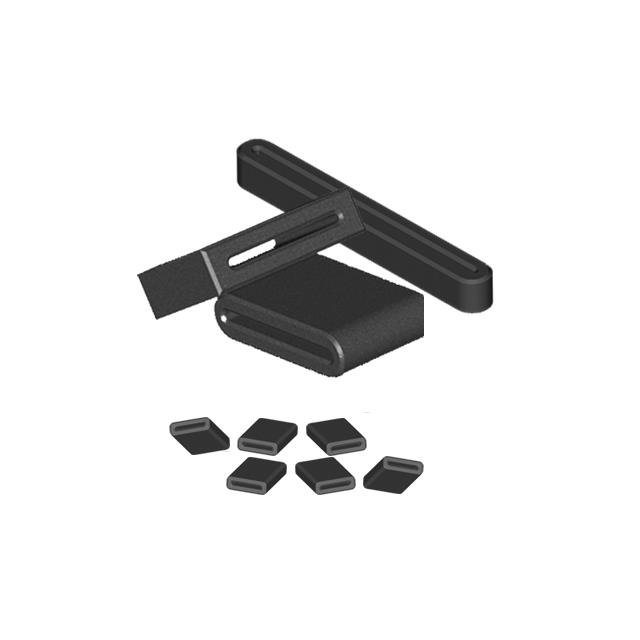
The Laird-Signal Integrity Products 28R0453-100 is a solid, free-hanging ferrite core designed for cable noise suppression. It features a rectangular cross-section with an internal dimension of 0.315 inches wide by 0.028 inches high (8.00mm x 0.71mm) and an external dimension of 0.453 inches wide by 0.197 inches high (11.50mm x 5.00mm). The component has a length of 0.394 inches (10.00mm) and provides an impedance of 104 Ohms at 100MHz. Constructed from material grade 28, it is suitable for through-hole or free-hanging installation on cables.
Verify the exact physical dimensions against your cable diameter before ordering, as the internal width and height are specific. Confirm that the material grade 28 aligns with your frequency requirements. Check RoHS compliance status if required by your manufacturing standards. Ensure the free-hanging installation method is compatible with your assembly process. Validate the 104 Ohm impedance specification against your circuit's noise profile needs.
Select this component when a rectangular ferrite core is required for flat or ribbon cables where standard round cores do not fit properly. The 104 Ohm impedance at 100MHz makes it suitable for general-purpose EMI suppression in digital circuits. Consider the solid design for applications requiring robust mechanical stability without additional clamping hardware. Compare with other 28R series parts if different impedance levels or dimensions are needed.
This part belongs to the 28R series of solid ferrite cores from Laird-Signal Integrity Products. These components are distinct from snap-on or split-core designs due to their solid construction, which requires threading the cable during assembly. The series offers various impedance values and dimensions to accommodate different cable sizes and noise frequencies.
Direct substitutes may include other Laird 28R series parts with similar impedance and dimensions, such as 28R0453-200, though impedance differences must be verified. Cross-brand replacements require matching internal/external dimensions and impedance curves.
 28R0453-100
The activity of extra discounts on wholesale prices is in full swing…
Please fill in your contact information and we will send you the latest wholesale price list.