ChipApex | Global Electronic Components Supplier
SEARCH
Search Product
Search Post
— IC芯片 | 连接器 | 传感器 | 被动器件 —
Search productSearch post
— IC芯片 | 连接器 | 传感器 | 被动器件 —
Consult the customer manager about the wholesale price.
consultation hotline:86-132-6715-2157
email:[email protected]
Contact the product manager for consultation. One-stop consultation is available.
Do you want a lower wholesale price? Please send us your inquiry and we will reply immediately.
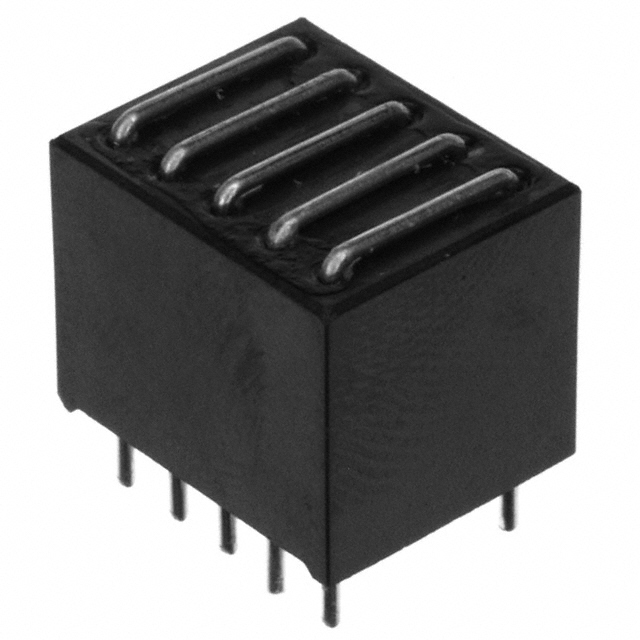
The 29F0528-0T0-10 is a five-line ferrite bead filter manufactured by Laird-Signal Integrity Products. It features a 10-THD through-hole package with dimensions supporting high-current applications. The component provides an impedance of 342 Ohms at 100 MHz and supports a maximum current rating of 10 Amperes. Its DC resistance (DCR) is maximized at 10 milliohms, ensuring minimal signal loss. The unit operates within a temperature range of -40°C to 125°C.
Verify the specific pinout and lead configuration against the official datasheet before integration, as through-hole components require precise PCB footprint alignment. Confirm that the 10A current rating aligns with your system's peak load requirements to prevent thermal issues. Ensure the operating temperature range meets your environmental specifications. Cross-reference the manufacturer part number with authorized distributors to avoid counterfeit components.
Select this component when multi-line noise suppression is required on high-current paths where surface-mount options are insufficient. The through-hole design offers superior mechanical strength compared to SMD alternatives. Consider the 342 Ohm impedance profile for target frequency attenuation. Evaluate the physical size constraints of the 10-THD package against available board space. Compare DCR values with alternative filters to optimize power efficiency.
This component belongs to Laird-Signal Integrity Products' EMI filtering portfolio, designed for electromagnetic interference mitigation. It complements other ferrite beads and common mode chokes in comprehensive noise management strategies. The product line emphasizes signal integrity solutions for demanding electronic environments. Integration typically involves placement near noise sources or sensitive receivers to maximize filtering effectiveness.
Direct substitutes must match the five-line configuration, 10A current rating, and 10-THD package. Verify impedance characteristics at 100 MHz to ensure equivalent noise attenuation. Check DCR limits to maintain similar power loss profiles. Ensure thermal performance matches the -40°C to 125°C operating range.
 29F0528-0T0-10
The activity of extra discounts on wholesale prices is in full swing…
Please fill in your contact information and we will send you the latest wholesale price list.