 ChipApex | Global Electronic Components Supplier
SEARCH
Search Product
Search Post
— IC芯片 | 连接器 | 传感器 | 被动器件 —
Search productSearch post
— IC芯片 | 连接器 | 传感器 | 被动器件 —
Consult the customer manager about the wholesale price.
consultation hotline:86-132-6715-2157
email:[email protected]
Contact the product manager for consultation. One-stop consultation is available.
Do you want a lower wholesale price? Please send us your inquiry and we will reply immediately.
The Central Semiconductor Corp 2N1596 TIN/LEAD is a silicon NPN bipolar junction transistor (BJT) designed for through-hole mounting in TO-39-3 packages. It features a collector-emitter voltage (VCEO) of 40 V, a collector-base voltage (VCBO) of 60 V, and an emitter-base voltage (VEBO) of 7 V. The device supports a maximum continuous DC collector current of 1 A and dissipates up to 1 W of power. Key electrical characteristics include a minimum DC current gain (hFE) of 70 at 10 mA and 1 V, with a transition frequency (fT) of 80 MHz. Operating temperatures range from -65°C to +150°C.
Verify the specific ordering suffix against manufacturer documentation to confirm lead-free compliance status, as tin/lead designations may vary by production batch. Confirm RoHS directive alignment prior to integration into regulated assemblies. Cross-reference datasheet revisions to ensure parameter consistency with current manufacturing standards before finalizing procurement specifications.
Select this component when a ruggedized NPN transistor with a metal case is required for high-reliability environments. Ensure the circuit voltage does not exceed the 40 V collector-emitter rating. Verify that the thermal management strategy accommodates the 1 W power dissipation limit within the specified temperature range. Compare hFE requirements against the minimum specification of 70 to guarantee adequate drive capability.
This part belongs to the standard discrete bipolar transistor lineup manufactured by Central Semiconductor Corp. The company specializes in custom and standard discrete semiconductors, including BJTs, diodes, and MOSFETs. The 2N1596 represents a legacy numbering scheme often utilized in military and aerospace-grade hardware, reflecting its historical significance in high-reliability electronics design.
Consult official substitution guides for equivalent TO-39 NPN transistors with matching voltage and current ratings. Verify pinout compatibility and thermal resistance characteristics before implementing any alternative components in existing designs.
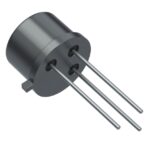 2N1596 TIN/LEAD
The activity of extra discounts on wholesale prices is in full swing…
Please fill in your contact information and we will send you the latest wholesale price list.




