 ChipApex | Global Electronic Components Supplier
SEARCH
Search Product
Search Post
— IC芯片 | 连接器 | 传感器 | 被动器件 —
Search productSearch post
— IC芯片 | 连接器 | 传感器 | 被动器件 —
Consult the customer manager about the wholesale price.
consultation hotline:86-132-6715-2157
email:[email protected]
Contact the product manager for consultation. One-stop consultation is available.
Do you want a lower wholesale price? Please send us your inquiry and we will reply immediately.
The 2N2322 TIN/LEAD is a hermetically sealed Silicon Controlled Rectifier (SCR) manufactured by Central Semiconductor Corp. Designed for sensing circuit applications and control systems, this component operates with a maximum repetitive peak off-state voltage of 400V and an RMS on-state current of 1.6A. It features a gate trigger voltage of 5.0V and a gate trigger current of 200µA. The device utilizes a TO-92-3 through-hole package, supporting a junction temperature range from -65°C to +150°C. It complies with RoHS3 standards and carries an EAR99 classification.
Verify the specific ordering suffix required for tin/lead plating when placing orders, as availability may vary by plating type. Confirm lead times directly with Central Semiconductor or authorized distributors, as production cycles can extend significantly. Ensure compliance with export classifications and environmental regulations relevant to your region before finalizing procurement.
Select the 2N2322 for applications requiring a robust, hermetically sealed SCR with moderate current handling capabilities. Compare its 400V blocking voltage and 1.6A RMS rating against system requirements. Consider the TO-92-3 package size for space-constrained designs. Verify that the gate trigger characteristics align with the driving circuit's output capabilities.
The 2N2322 belongs to the Central Semiconductor 2N2322 series of silicon controlled rectifiers. This series encompasses various voltage ratings ranging from 25V to 400V, all sharing similar current handling specifications. The component serves as a fundamental switching element in thyristor circuits, offering durability through its hermetic seal compared to non-sealed alternatives.
Equivalent parts include the CS55B and CS55BZ from Central Semiconductor, which offer similar 0.8A to 1.6A ratings at 200V and 400V. Other manufacturers produce compatible SCRs such as the 2N2322 from New Jersey Semi-Conduct or Comset Semiconductor. Verify pinout compatibility and thermal characteristics when substituting.
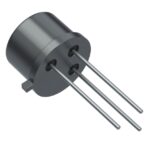 2N2322 TIN/LEAD
The activity of extra discounts on wholesale prices is in full swing…
Please fill in your contact information and we will send you the latest wholesale price list.




