 ChipApex | Global Electronic Components Supplier
SEARCH
Search Product
Search Post
— IC芯片 | 连接器 | 传感器 | 被动器件 —
Search productSearch post
— IC芯片 | 连接器 | 传感器 | 被动器件 —
Consult the customer manager about the wholesale price.
consultation hotline:86-132-6715-2157
email:[email protected]
Contact the product manager for consultation. One-stop consultation is available.
Do you want a lower wholesale price? Please send us your inquiry and we will reply immediately.
The TPS3809K33QDBVRG4Q1 is a three-pin supply voltage supervisor designed for automotive applications, featuring AEC-Q100 qualification. It monitors a single input voltage with a threshold of 2.93 V and an overvoltage threshold of 2.99 V. The device provides an active low, push-pull reset output with a fixed delay of 200 ms. Operating from 2 V to 6 V, it consumes 9 µA of quiescent current. Accuracy is specified at 2.2%, and it functions within a temperature range of -40°C to +125°C in an SOT-23-3 package.
Verify the specific suffix G4Q1 against official Texas Instruments documentation to confirm pinout and electrical characteristics match the required design specifications. Ensure the component meets AEC-Q100 reliability standards for the intended automotive environment. Cross-reference the manufacturer part number with authorized distributors to avoid counterfeit sources. Confirm package type SOT-23-3 compatibility with PCB footprint requirements before procurement.
Select this component when a simple, low-power voltage supervisor is needed for automotive systems requiring a 2.93 V threshold. The active low output suits logic interfaces requiring negative assertion. Consider the 200 ms delay for system startup timing. Verify that the 6 V maximum input voltage aligns with the monitored rail. The SOT-23-3 package offers space efficiency for compact designs.
This part belongs to the TPS3809 family of supply voltage supervisors. It is specifically engineered for automotive electronics, distinguishing it from commercial variants through extended temperature ranges and robustness standards. The Q1 designation indicates automotive qualification. The G4 suffix typically denotes specific packaging or tape-and-reel configurations defined by the manufacturer.
Check for direct cross-reference part numbers listed in Texas Instruments substitution guides. Ensure any replacement maintains the 2.93 V threshold and SOT-23-3 package. Verify AEC-Q100 compliance if used in automotive contexts. Confirm pinout compatibility to prevent board redesign.
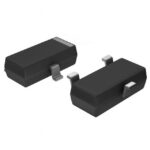 2U3809K33QDBVRG4Q1
The activity of extra discounts on wholesale prices is in full swing…
Please fill in your contact information and we will send you the latest wholesale price list.





