ChipApex | Global Electronic Components Supplier

SEARCH
Search Product
Search Post
— IC芯片 | 连接器 | 传感器 | 被动器件 —
Search productSearch post
— IC芯片 | 连接器 | 传感器 | 被动器件 —
Consult the customer manager about the wholesale price.
consultation hotline:86-132-6715-2157
email:[email protected]
Contact the product manager for consultation. One-stop consultation is available.
Do you want a lower wholesale price? Please send us your inquiry and we will reply immediately.
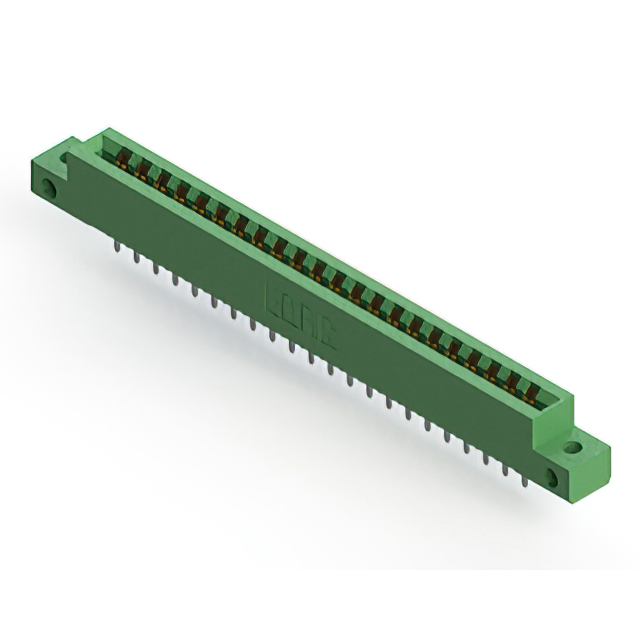
The EDAC Inc. 306-022-520-112 is a standard card edge connector from the 306 Series, designed for dual-edge board applications. It features 44 positions with a contact spacing of 0.156 inches (3.96 mm). The connector utilizes tail-type contacts with gold plating on the contact area and is constructed with a green thermoplastic insulator body. It is engineered to accept printed circuit boards with a nominal thickness ranging from 0.054 to 0.070 inches (1.37 mm to 1.78 mm).
Verify the specific suffix code against the manufacturer's current datasheet to confirm exact plating thickness and material specifications. Ensure compatibility with the target PCB thickness range of 1.37 mm to 1.78 mm before procurement. Confirm that the dual-edge form factor aligns with the mechanical design constraints of the assembly. Check for any regional distribution restrictions or lead time variations associated with this specific part number.
Select this component when a dual-edge interface is required for high-density signal routing in industrial environments. The 3.96 mm pitch offers a balance between pin count and spacing for standard board layouts. Consider the gold plating for environments where long-term reliability and low contact resistance are critical. Ensure the mounting style and panel cutout dimensions match the system enclosure requirements.
This part belongs to the EDAC 306 Series, which specializes in standard card edge connectors. The series is characterized by its durable construction and suitability for various electronic applications. The 306-022-520-112 variant specifically addresses the need for dual-edge connectivity with a 44-position layout, distinguishing it from single-edge or different pitch variants within the broader product line.
Direct substitutes may include other EDAC 306 Series parts with matching 44-position counts and 3.96 mm spacing. Verify that alternative dual-edge connectors maintain identical PCB thickness tolerances and contact plating specifications to ensure mechanical and electrical compatibility without redesigning the host board.
 306-022-520-112

The activity of extra discounts on wholesale prices is in full swing…
Please fill in your contact information and we will send you the latest wholesale price list.