ChipApex | Global Electronic Components Supplier
SEARCH
Search Product
Search Post
— IC芯片 | 连接器 | 传感器 | 被动器件 —
Search productSearch post
— IC芯片 | 连接器 | 传感器 | 被动器件 —
Consult the customer manager about the wholesale price.
consultation hotline:86-132-6715-2157
email:[email protected]
Contact the product manager for consultation. One-stop consultation is available.
Do you want a lower wholesale price? Please send us your inquiry and we will reply immediately.
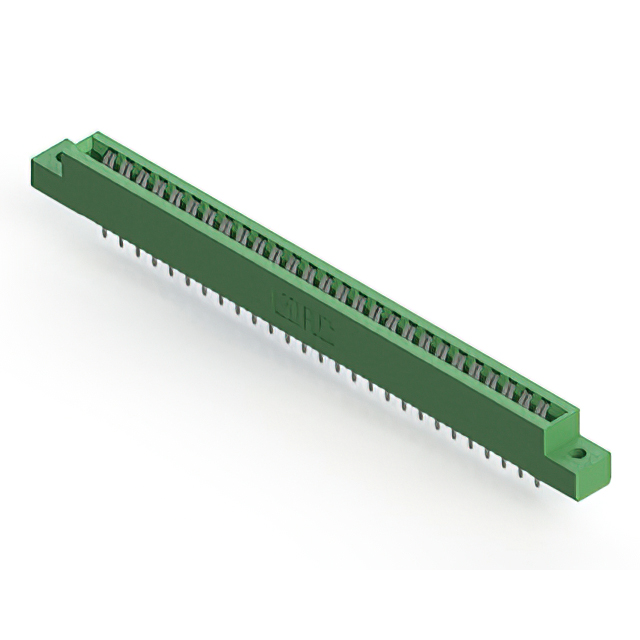
The EDAC Inc. 306-027-420-102 is a standard card edge connector from the 306 series, designed for dual-edge board applications. It features 54 positions with a contact spacing of 0.156 inches (3.96 mm). The connector accepts printed circuit boards with a nominal thickness of 0.062 inches (1.57 mm). Contact plating is tin over nickel, and the current rating is specified at 5 A. The insulator body is constructed from green thermoplastic polyester, providing a low-profile design suitable for panel mount installations.
Verify that the target application utilizes a dual-edge PCB configuration compatible with the 0.156-inch pitch. Confirm that the operating environment does not exceed the thermal limits of the thermoplastic polyester housing. Ensure the mounting panel allows for the required clearance around the connector body to facilitate proper insertion and removal of the card edge module during maintenance or replacement procedures.
Select this component when a dual-edge connection is required for a 54-position interface. The 3.96 mm pitch distinguishes it from finer pitch alternatives. Verify compatibility with the specific PCB thickness of 1.57 mm to ensure proper contact engagement. Consider the tin-plated contacts for general-purpose environments where high corrosion resistance is not the primary constraint compared to gold-plated variants.
This part belongs to the EDAC 306 series, which focuses on standard card edge connectors. The series offers various position counts and termination options. The 306-027-420-102 specifically addresses the need for dual-edge connectivity in a robust panel-mount format, differing from single-edge or surface-mount variants within the broader product line.
Direct substitutes include other EDAC 306 series parts with matching 54 positions and 3.96 mm pitch, such as the 306-027-520-102 if gold plating is preferred. Cross-manufacturer replacements require strict verification of pitch, board thickness tolerance, and contact geometry to maintain electrical continuity and mechanical fit.
 306-027-420-102
The activity of extra discounts on wholesale prices is in full swing…
Please fill in your contact information and we will send you the latest wholesale price list.