ChipApex | Global Electronic Components Supplier

SEARCH
Search Product
Search Post
— IC芯片 | 连接器 | 传感器 | 被动器件 —
Search productSearch post
— IC芯片 | 连接器 | 传感器 | 被动器件 —
Consult the customer manager about the wholesale price.
consultation hotline:86-132-6715-2157
email:[email protected]
Contact the product manager for consultation. One-stop consultation is available.
Do you want a lower wholesale price? Please send us your inquiry and we will reply immediately.
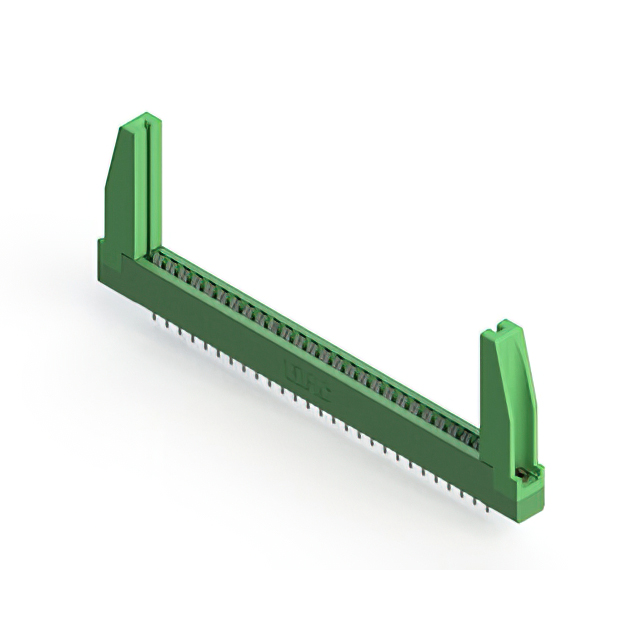
The EDAC Inc. 306-027-420-178 is a standard card edge connector receptacle from the 306 series. It features 54 positions arranged in a dual configuration with a 3.96 mm (0.156 inch) contact spacing. Designed for through-hole mounting, it accepts printed circuit boards with a nominal thickness of 1.57 mm (0.062 inch). The contacts are made of copper alloy and finished with tin plating to ensure reliable soldering. The insulator body is constructed from green thermoplastic polyester, providing structural integrity and electrical insulation.
Verify that the specific part number matches the required dual-edge card specification and pin count. Confirm that the tin-plated contact finish aligns with your manufacturing process requirements. Ensure the board thickness tolerance falls within the accepted range for proper mechanical retention. Check RoHS compliance status against current regulatory standards before finalizing procurement orders.
Select this component when a dual-edge card interface with 3.96 mm pitch is required. The tin-plated contacts offer a cost-effective solution compared to gold finishes while maintaining adequate conductivity. Consider the straight mounting style and panel mount orientation for chassis integration. Verify that the operating temperature range meets the environmental conditions of the intended application site.
This connector belongs to the EDAC 306 series of standard card edge connectors. The series provides various position counts and configurations for diverse electronic assembly needs. The 306 series is characterized by its robust thermoplastic polyester housing and standardized dimensional tolerances. This specific model represents a high-density option within the family, offering 54 connection points for complex signal routing.
Direct substitutes within the same series include models with identical 3.96 mm pitch and dual-edge compatibility. Verify mechanical dimensions and terminal alignment before swapping components. Alternative manufacturers may offer similar specifications but require validation of footprint and clearance constraints.
 306-027-420-178

The activity of extra discounts on wholesale prices is in full swing…
Please fill in your contact information and we will send you the latest wholesale price list.