ChipApex | Global Electronic Components Supplier
SEARCH
Search Product
Search Post
— IC芯片 | 连接器 | 传感器 | 被动器件 —
Search productSearch post
— IC芯片 | 连接器 | 传感器 | 被动器件 —
Consult the customer manager about the wholesale price.
consultation hotline:86-132-6715-2157
email:[email protected]
Contact the product manager for consultation. One-stop consultation is available.
Do you want a lower wholesale price? Please send us your inquiry and we will reply immediately.
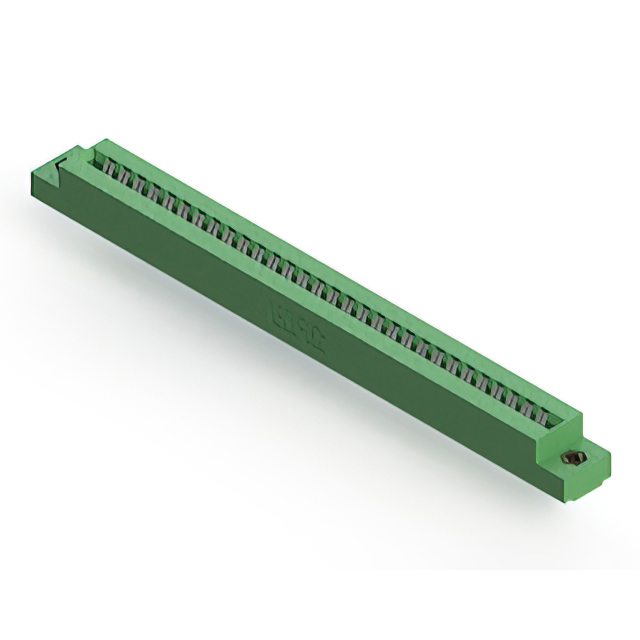
The EDAC Inc. 306-030-421-107 is a standard card edge connector receptacle featuring 60 positions with a 3.96 mm pitch. Designed for dual-edge non-specified cards, it utilizes a single central row of contacts. The component supports panel mount installation at a vertical angle and employs solder pin termination. Contacts are constructed from copper alloy with tin plating, rated for 5 A current. The insulator is made of green thermoplastic polyester, ensuring an insulation resistance of 5 GOhms.
Verify the specific ordering suffix to confirm contact plating and material composition, as variations exist within the series. Confirm that the required card thickness falls within the specified operational range of 1.37 mm to 1.78 mm. Ensure the application environment does not exceed the maximum operating temperature of +105°C or fall below -40°C. Cross-reference the manufacturer datasheet for precise mechanical dimensions before finalizing procurement specifications.
Select this component when a 60-position interface with a 3.96 mm pitch is required for dual-edge board applications. The tin-plated copper alloy contacts offer cost-effective conductivity suitable for general-purpose environments. Consider the vertical panel mount orientation for integration into chassis designs. Verify compatibility with the target PCB stack-up and ensure the thermoplastic polyester housing meets the thermal requirements of the assembly process.
This part belongs to the EDAC 306 Series, which provides a comprehensive range of standard card edge connectors. The series offers various position counts and mounting options to support diverse electronic interconnection needs. Components in this family share common design principles, including reliable solder termination and standardized pitch dimensions, facilitating consistent engineering practices across different product lines.
Direct substitutes include other EDAC 306 series parts with matching 60-position counts and 3.96 mm pitch, such as 306-030-420-107, provided the contact plating specification aligns with system requirements. Verify mechanical fit and electrical ratings before substitution.
 306-030-421-107
The activity of extra discounts on wholesale prices is in full swing…
Please fill in your contact information and we will send you the latest wholesale price list.