ChipApex | Global Electronic Components Supplier
SEARCH
Search Product
Search Post
— IC芯片 | 连接器 | 传感器 | 被动器件 —
Search productSearch post
— IC芯片 | 连接器 | 传感器 | 被动器件 —
Consult the customer manager about the wholesale price.
consultation hotline:86-132-6715-2157
email:[email protected]
Contact the product manager for consultation. One-stop consultation is available.
Do you want a lower wholesale price? Please send us your inquiry and we will reply immediately.
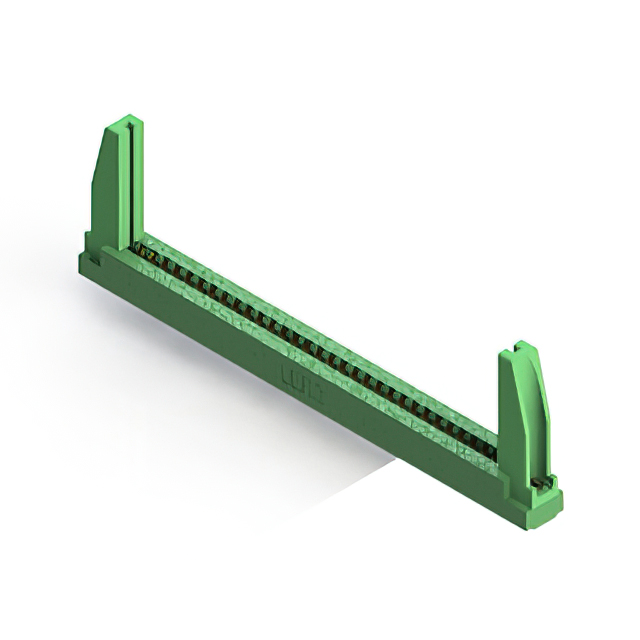
The EDAC Inc. 306-032-521-178 is a dual-edge female card edge connector from the 306 Series, designed for board-to-board interconnection. It features 64 positions with a 0.156-inch (3.96mm) contact spacing and accepts printed circuit boards with a nominal thickness of 0.062 inches (1.57mm). The connector utilizes cantilever contacts made of copper alloy with gold plating for reliable signal transmission. It employs a solder termination method and is housed in a green polyamide (PA66) insulator body. The component operates within a temperature range of -55°C to 85°C and is classified as a standard edgeboard connector suitable for various industrial applications.
Verify the specific ordering suffix against the manufacturer's current datasheet to confirm contact finish thickness and material composition. Ensure the selected variant matches the required PCB thickness tolerance of 0.062 inches. Confirm that the solder termination style aligns with the assembly process capabilities. Cross-reference the package quantity and lead time requirements with authorized distributors prior to purchase.
Select this connector when a dual-edge female interface with 0.156-inch spacing is required for 64-position applications. Consider the low-profile design for space-constrained assemblies. Verify compatibility with the target PCB thickness and operating temperature range. Evaluate the gold plating benefits for corrosion resistance in the intended environment compared to alternative finishes.
This component belongs to the EDAC 306 Series, which offers standardized card edge connectors with 0.156-inch spacing. The series provides various position counts and mounting options for diverse interconnection needs. EDAC designs these connectors to meet rigorous quality standards for industrial and commercial use, ensuring consistent performance across different application scenarios.
Consult official EDAC documentation for direct cross-references or updated part numbers within the 306 Series. Verify dimensional compatibility and electrical specifications before substituting with generic equivalents.
 306-032-521-178
The activity of extra discounts on wholesale prices is in full swing…
Please fill in your contact information and we will send you the latest wholesale price list.