ChipApex | Global Electronic Components Supplier
SEARCH
Search Product
Search Post
— IC芯片 | 连接器 | 传感器 | 被动器件 —
Search productSearch post
— IC芯片 | 连接器 | 传感器 | 被动器件 —
Consult the customer manager about the wholesale price.
consultation hotline:86-132-6715-2157
email:[email protected]
Contact the product manager for consultation. One-stop consultation is available.
Do you want a lower wholesale price? Please send us your inquiry and we will reply immediately.
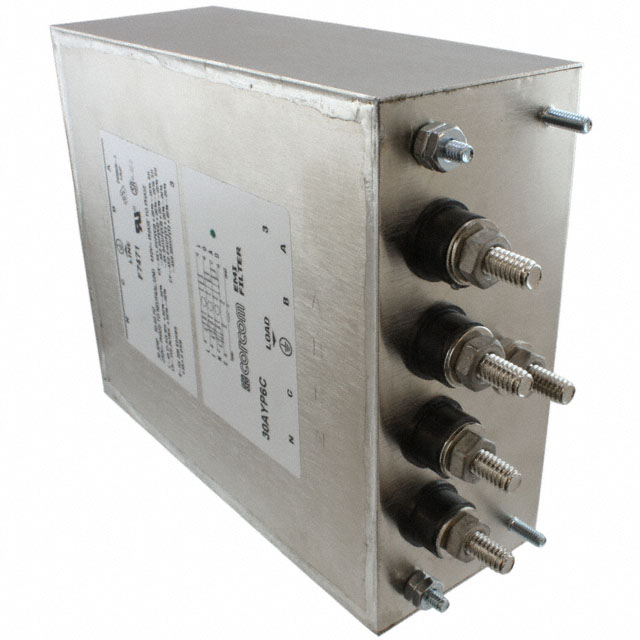
The TE Connectivity Corcom 30AYP6C is a high-performance three-phase RFI power line filter designed for four-wire WYE configurations. It features a current rating of 30A and operates at voltages up to 440V AC. The unit supports 50Hz and 60Hz frequencies with an operating temperature range of -10°C to 40°C. Termination is achieved via threaded bolt studs on both input and output sides. This two-stage filter provides common mode and differential mode noise suppression, ensuring compliance with safety standards including UL, CSA, VDE, and ENEC certifications.
Verify the specific voltage rating and agency approvals against the product offering chart, as these vary by configuration. Confirm that the threaded bolt termination style matches your panel mounting requirements. Ensure the application environment stays within the specified -10°C to 40°C operating temperature range. Check lead times as standard availability may be extended due to manufacturing schedules.
Select this model for three-phase, four-wire WYE systems requiring 30A capacity. It is suitable for general-purpose noise reduction where moderate insertion loss is sufficient. Consider higher current ratings or custom solutions if loads exceed 30A or if unique voltage requirements exist. Verify compatibility with existing panel cutouts and stud sizes before integration into the power distribution architecture.
This component belongs to the Corcom A Series, which includes single and three-phase high-current power line filters. The series offers current ratings from 30A to 600A and is designed to meet demanding performance requirements. The AYP variant specifically targets lower noise environments with single-stage designs, while the broader line supports delta or wye configurations for various industrial power needs.
Consult the official TE Connectivity product offering chart for verified substitute part numbers. Ensure any replacement maintains the same WYE configuration, 30A current rating, and 440V AC voltage capability. Verify that the alternative component meets identical safety agency approvals and physical mounting dimensions for direct interchangeability.
 30AYP6C
The activity of extra discounts on wholesale prices is in full swing…
Please fill in your contact information and we will send you the latest wholesale price list.