 ChipApex | Global Electronic Components Supplier
SEARCH
Search Product
Search Post
— IC芯片 | 连接器 | 传感器 | 被动器件 —
Search productSearch post
— IC芯片 | 连接器 | 传感器 | 被动器件 —
Consult the customer manager about the wholesale price.
consultation hotline:86-132-6715-2157
email:[email protected]
Contact the product manager for consultation. One-stop consultation is available.
Do you want a lower wholesale price? Please send us your inquiry and we will reply immediately.
The Rosenberger 32AS102-K40S3 is a fixed coaxial attenuator designed for signal conditioning in RF systems. It operates within a frequency range of 0 Hz to 18 GHz and provides a nominal attenuation value of 40 dB. The component features SMA connectors with a 50 Ohm impedance, ensuring compatibility with standard RF infrastructure. Constructed as an in-line module, it supports a maximum power handling capacity of 33.01 dBm. The device utilizes gold-plated contacts and stainless steel components to maintain signal integrity and durability across high-frequency applications.
Verify the specific model designation against official Rosenberger documentation to ensure accuracy, as part numbers may have variations or supersessions. Confirm that the required attenuation value and frequency range align with system specifications before procurement. Check for RoHS compliance status if environmental regulations apply to the intended deployment environment. Ensure connector polarity and impedance match existing infrastructure to prevent mismatch losses.
Select this component when a fixed 40 dB reduction is required within the 18 GHz bandwidth. Consider the power handling limit of 33.01 dBm to avoid thermal damage during operation. Verify SMA connector compatibility with adjacent components in the signal chain. Evaluate the need for in-line modular construction versus other form factors based on space constraints.
This attenuator belongs to Rosenberger's series of fixed coaxial attenuators, which are engineered for high-performance RF applications. These components are typically used to protect sensitive downstream equipment from high-power signals or to adjust signal levels for accurate measurement. The SMA interface ensures widespread interoperability with standard RF testing and communication hardware.
Consult official Rosenberger catalogs for direct substitutes or updated part numbers. Verify that any replacement maintains the 40 dB attenuation value and 18 GHz operational limit. Ensure connector type and impedance remain consistent to preserve system performance.
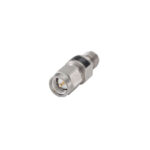 32AS102-K40S3
The activity of extra discounts on wholesale prices is in full swing…
Please fill in your contact information and we will send you the latest wholesale price list.





