 ChipApex | Global Electronic Components Supplier

SEARCH
Search Product
Search Post
— IC芯片 | 连接器 | 传感器 | 被动器件 —
Search productSearch post
— IC芯片 | 连接器 | 传感器 | 被动器件 —
Consult the customer manager about the wholesale price.
consultation hotline:86-132-6715-2157
email:[email protected]
Contact the product manager for consultation. One-stop consultation is available.
Do you want a lower wholesale price? Please send us your inquiry and we will reply immediately.
The 34AA04-E/SN is a 4-kbit serial electrically erasable programmable read-only memory (EEPROM) manufactured by Microchip Technology. It features a 512 x 8 organization and utilizes a 2-wire I2C interface with a maximum clock frequency of 1 MHz. The device operates within a supply voltage range of 1.7 V to 3.6 V and is housed in an SOIC-8 package. It supports surface mount installation and offers a data retention period of 200 years. The component functions reliably across an extended industrial temperature range from -40°C to +125°C.
Verify the specific suffix 'E' indicates the extended temperature grade (-40°C to +125°C) as defined in official documentation. Confirm the package type matches the required PCB footprint, which is SOIC-8 for this variant. Ensure compatibility with the 1.7 V to 3.6 V supply voltage constraints of the target application. Check for any recent Product Change Notifications regarding assembly sites or materials that may affect integration.
Select this component when SPD functionality for DDR4 is required alongside extended temperature resilience. The 1 MHz clock speed offers faster access compared to standard 100 kHz EEPROMs. Consider the 3.6 V maximum voltage limit when designing power rails. The SOIC-8 package facilitates automated surface mount assembly. Verify that the 4-kbit capacity meets the system's configuration data requirements without excess overhead.
This part belongs to the 34AA04 series, which is optimized for System Parameter Data (SPD) applications. Unlike general-purpose EEPROMs, these devices are tailored for memory module identification and configuration. The 'E' suffix denotes the extended temperature variant, distinguishing it from commercial grade parts. It shares the same pinout and basic functionality as other 4-kbit I2C EEPROMs but focuses on SPD compliance.
Direct substitutes include other 34AA04 variants with compatible packages. Verify if the commercial grade version meets thermal requirements. Cross-reference with AT34C04 series for similar capacity and interface, noting potential differences in temperature ranges and packaging options.
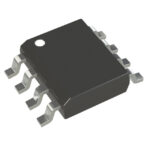 34AA04-E/SN

The activity of extra discounts on wholesale prices is in full swing…
Please fill in your contact information and we will send you the latest wholesale price list.





