ChipApex | Global Electronic Components Supplier
SEARCH
Search Product
Search Post
— IC芯片 | 连接器 | 传感器 | 被动器件 —
Search productSearch post
— IC芯片 | 连接器 | 传感器 | 被动器件 —
Consult the customer manager about the wholesale price.
consultation hotline:86-132-6715-2157
email:[email protected]
Contact the product manager for consultation. One-stop consultation is available.
Do you want a lower wholesale price? Please send us your inquiry and we will reply immediately.
The Texas Instruments 3656AG is a transformer-coupled isolation amplifier providing complete signal and power isolation in integrated circuit form. It features three-port isolation with an internal isolated power supply available for external use. The device offers a small-signal bandwidth of 30 kHz, a maximum leakage current of 0.5 μA at 120V/60Hz, and an isolation-mode rejection of 112 dB at 60Hz. It operates within a temperature range of -25°C to +85°C and utilizes a 20-lead ceramic DIP package.
Verify component authenticity through authorized distributors or direct manufacturer channels. Confirm compliance with RoHS directives as indicated by lead status. Ensure proper handling of the ceramic DIP package during installation. Review datasheet specifications for absolute maximum ratings to prevent damage. Validate pinout compatibility with existing PCB layouts before integration.
Select this component when high-voltage isolation between signal paths and power supplies is required. Consider the 30 kHz bandwidth for applications involving moderate-speed analog signals. Evaluate the need for three-port isolation versus two-port configurations based on system grounding requirements. Assess the availability of internal isolated power to reduce external component count. Verify temperature range suitability for the intended operating environment.
The 3656 series represents an early advancement in analog signal processing by integrating isolation functions into a single IC. Manufactured originally by Burr-Brown Corporation, it was designed to solve complex grounding issues in industrial and medical environments. The AG suffix denotes specific accuracy and temperature performance characteristics within the broader family.
Direct replacements are not explicitly listed in public documentation. Evaluate modern isolation amplifiers offering similar transformer-coupled architectures. Verify pinout compatibility if substituting with different package types. Check for equivalent isolation voltage ratings and bandwidth specifications. Consult manufacturer cross-reference guides for updated technology equivalents.
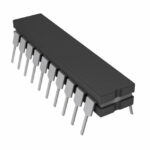 3656AG
The activity of extra discounts on wholesale prices is in full swing…
Please fill in your contact information and we will send you the latest wholesale price list.